Aquarium Crisis in Western NC? EasyClean’s Emergency Blog Has You Covered.
When your tank goes sideways — whether it’s a sudden leak, a chemistry crash, or a blackout that leaves your prized reef in the dark — panic is natural. But here’s the truth: you’re not alone, and you don’t have to guess your way through it.
EasyClean Aquatics is here to be your emergency hotline, your calm-in-the-chaos, and your go-to guide when things get wet, weird, or worrisome.
Need help right now? 📞 Call EasyClean Aquatics — fast, local emergency support for aquariums in Hendersonville and Western NC.
🚨 Why This Blog Exists
This isn’t just a blog. It’s a mission-driven emergency care guide built for aquarists who need help now — not after scrolling through forums or watching hour-long videos.
Whether you’re a seasoned reef keeper or a freshwater newbie, this series will walk you through:
What to do first when disaster strikes
How to stabilize your system without making things worse
When to call for help — and how EasyClean can step in
🔍 What We’ll Cover
Each entry tackles a real-world emergency with clear, actionable steps. No fluff. No jargon. Just calm, confident guidance.
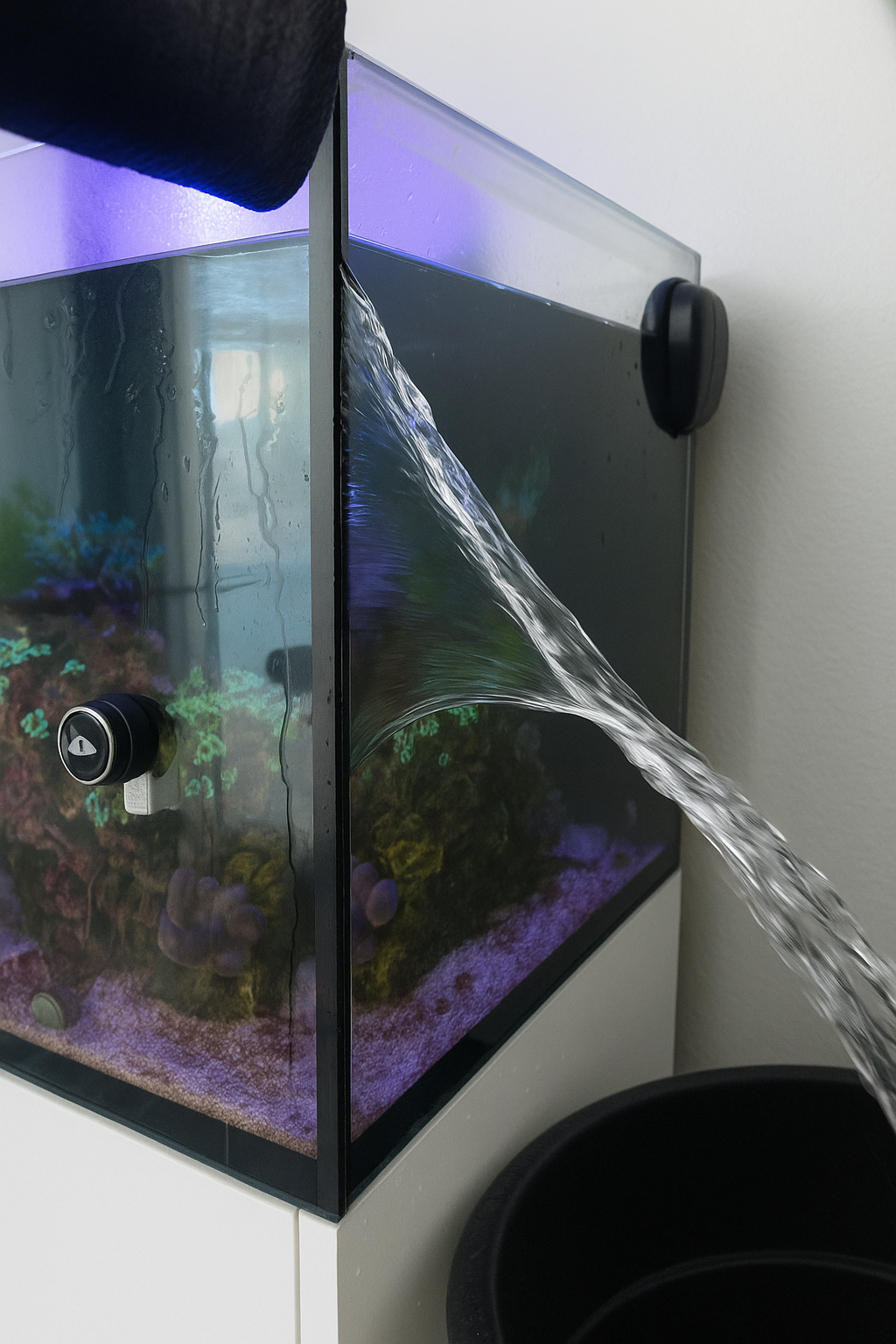
💧 Leaky Tank Protocol
What to grab, where to move livestock, and how to triage damage.
Towels won’t cut it — grab bins, battery air pumps, and a siphon
Move livestock before chasing the leak
Most leaks start at unions, bulkheads, or filter hoses — not the glass
Stabilize temperature and oxygen first, not salinity
Silicone patches are temporary; containment is priority More: How to prep a “go kit” for future leaks
⚗️ Chemistry Swings
Spotting pH, ammonia, or salinity spikes before they spiral.
Ammonia spikes often follow filter failure or livestock death
pH crashes can happen overnight — especially in planted tanks
Salinity swings are common after top-offs or dosing errors
Test kits lie — always double-check with fresh reagents
Don’t chase numbers; stabilize slowly More: Emergency dosing vs. water changes — when and how
⚡ Power Outage Survival
Keeping oxygen flowing and heat stable when the grid goes down.
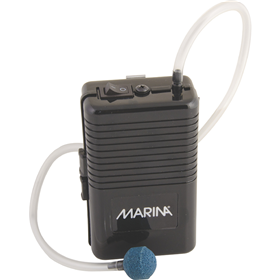
Oxygen drops before temperature — battery air pumps are lifesavers
Surface agitation matters more than flow rate
Wrap your tank in blankets, not heaters
Reef tanks crash faster than freshwater — act accordingly
UPS backups work for air pumps, not heaters More: DIY oxygen hacks and heat retention tricks
🐠 Livestock Emergencies
What to do when fish or corals show signs of distress.
Gasping at the surface = oxygen issue, not disease
Coral bleaching can happen in hours — check lighting and flow
Sudden aggression often signals environmental stress
QT tanks aren’t just for disease — they’re for triage
Don’t medicate until you stabilize water parameters More: Emergency dips, freshwater baths, and when to isolate
🧼 Filter Failures & Overflow Mayhem
How to contain chaos and protect your aquascape.
Overflow boxes clog silently — check them weekly
Canister filters leak at hose unions and O-rings
Sump floods often start with skimmer backflow
Always unplug before inspecting — even “off” pumps can surge
Bacteria die fast without flow — restart with Prime or Stability More: How to restart filtration without crashing your cycle
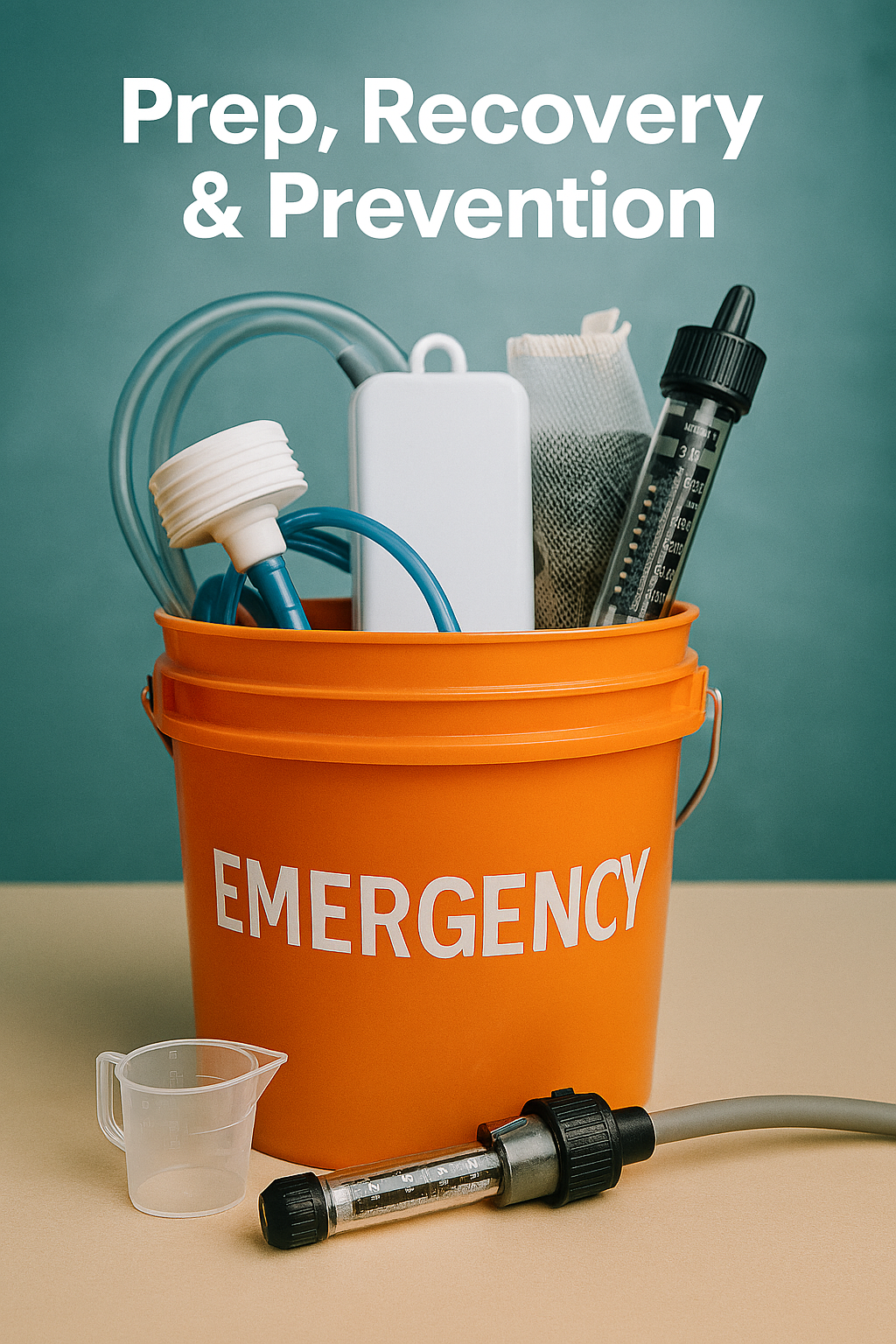
Prep, Recovery & Prevention
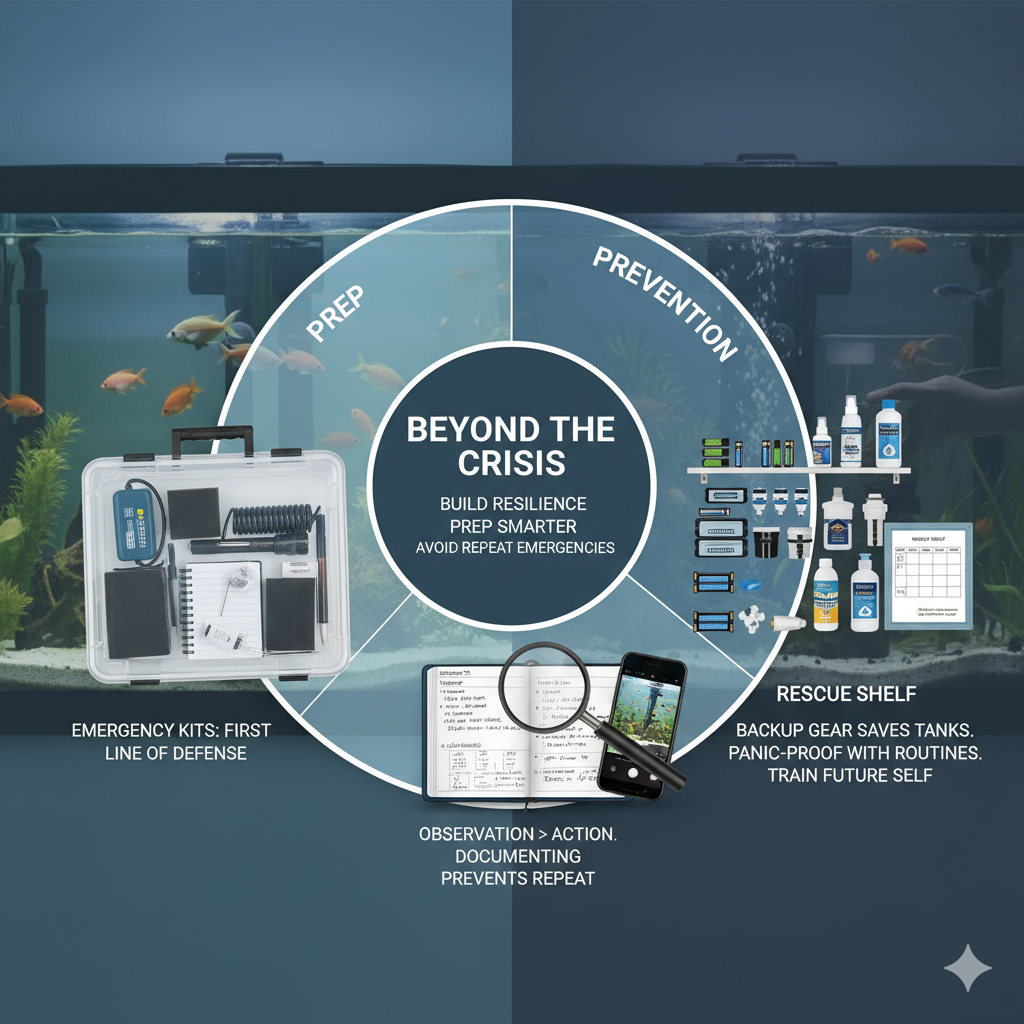
Beyond the crisis — how to build resilience, prep smarter, and avoid repeat emergencies.
Emergency kits aren’t optional — they’re your first line of defense
Recovery starts with observation, not action
Documenting what went wrong helps prevent it next time
Backup gear saves tanks — battery air pumps, spare heaters, extra media
Prevention is emotional too — panic-proof your setup with routines More: How to build a “rescue shelf” and train your future self
➕ More
From cracked heaters to runaway salinity, we’ll keep adding real-world scenarios as they surface.
Cracked heaters can spike voltage or crash temp — unplug first, then assess
Salt creep isn’t cosmetic — it’s a warning sign of overflow risk
Air bubbles in return lines? Could be a siphon break or cavitating pump
Not all emergencies are dramatic — slow leaks and silent failures are just as dangerous
Every new post adds to your toolkit — one calm, confident fix at a time