Clownfish, Ocellaris
Common Name
Clownfish, Ocellaris Clownfish, False Percula Clownfish
Scientific Name
Amphiprion ocellaris
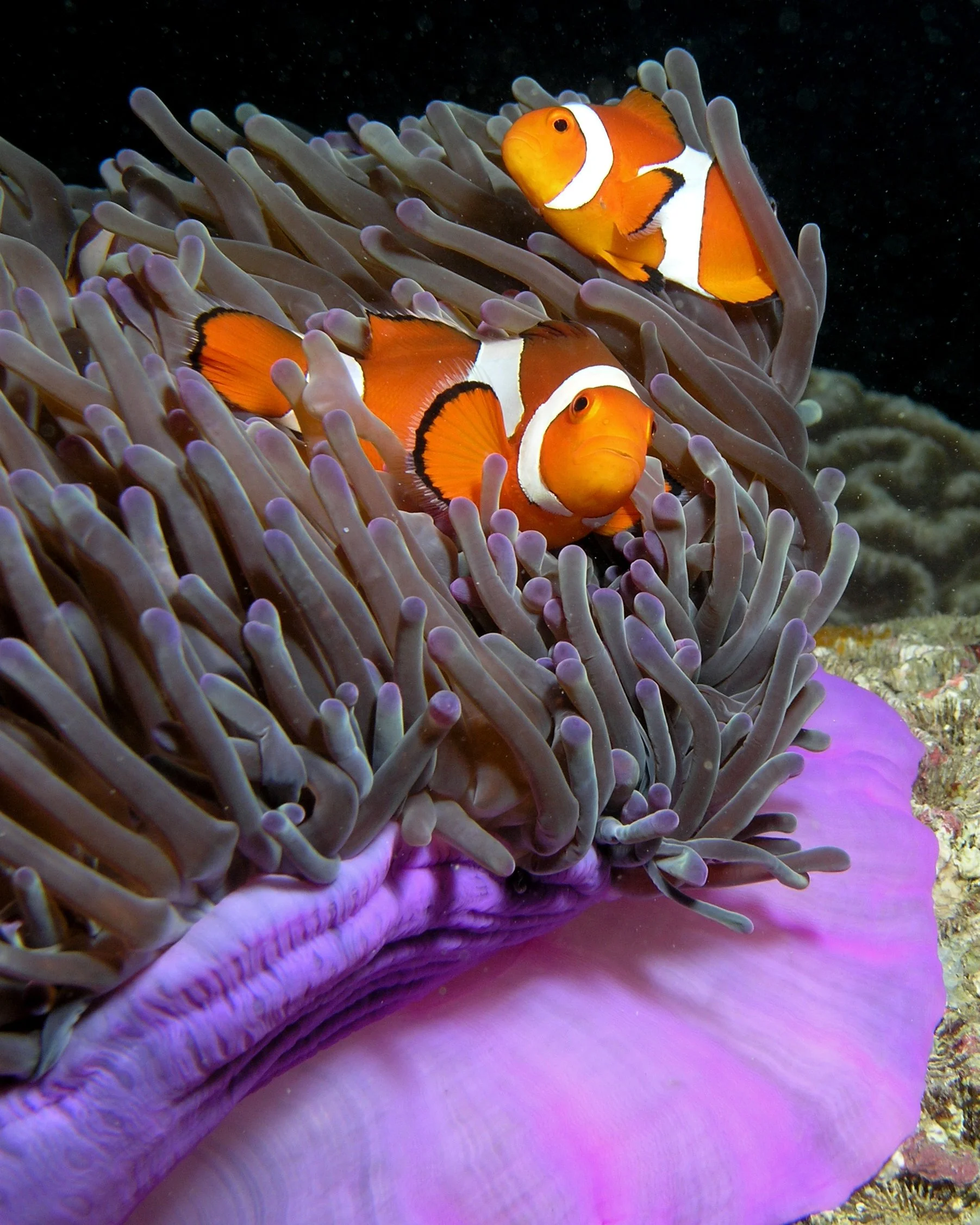
Ocellaris Clownfish (Amphiprion ocellaris) — captive-bred specimens are reef-safe and recommended for community tanks.
photo By Nhobgood - Nick Hobgood - Own work, CC BY-SA 3.0, https://commons.wikimedia.org/w/index.php?curid=5616409
Adult Size
3–4 inches (7–10 cm)
Description
The Ocellaris Clownfish (Amphiprion ocellaris) is one of the most recognizable and beloved marine species in the aquarium hobby. With its vivid orange body, crisp white bands, and playful demeanor, it has become a symbol of reefkeeping worldwide — often referred to as the “Nemo” fish due to its pop culture fame. But beyond its iconic appearance, the Ocellaris is valued for its hardiness, adaptability, and personality.
In the wild, this species forms symbiotic relationships with sea anemones, gaining protection from predators while offering cleaning and nutrient benefits to its host. However, in captivity — especially among captive-bred individuals — the Ocellaris thrives even without anemones, often adopting substitute hosts like coral skeletons or rock crevices. These tank-raised fish are more tolerant of aquarium conditions, less aggressive, and readily accept a wide range of prepared diets including pellets, frozen foods, and enriched flakes.
Ocellaris Clownfish are bold, curious, and interactive, often becoming the centerpiece of beginner-to-intermediate reef systems. They tolerate minor fluctuations in water quality better than many marine species, making them ideal for aquarists still mastering reef chemistry and husbandry. Their manageable size, peaceful nature (outside of hosting behavior), and reef-safe profile make them a cornerstone species for sustainable, community-oriented marine aquaria.
Recommended Aquarium Size and Water Parameters
Clownfish (Amphiprioninae) are among the most iconic and beginner-friendly marine species, but their care still demands stable, reef-safe conditions. A bonded pair can thrive in tanks as small as 20–30 gallons, though larger systems offer better stability and compatibility with other reef inhabitants. These fish prefer tropical temperatures between 75–82°F (24–28°C), with salinity maintained at a specific gravity of 1.023–1.026. pH should remain slightly basic (8.1–8.4), supported by proper alkalinity (8–12 dKH) and calcium levels (380–450 ppm) to sustain both fish and any accompanying corals. Ammonia and nitrite must remain at 0 ppm, while nitrate should be kept below 20 ppm in fish-only setups and ideally under 5–10 ppm in reef environments. Clownfish are hardy but sensitive to swings in water chemistry, making consistent testing and maintenance essential for long-term health.
| Parameter | Range & Notes |
|---|---|
| Tank Size | 20–30 gallons (pair); larger systems preferred for stability and tank mate compatibility |
| Temperature | 75–82°F (24–28°C); stable tropical range, avoid sudden shifts |
| Specific Gravity / Salinity | 1.023–1.026; reef-safe range, monitor with refractometer or hydrometer |
| pH | 8.1–8.4; slightly basic, stable values support coral and fish health |
| Alkalinity | 8–12 dKH; supports pH stability and coral calcification |
| Calcium | 380–450 ppm; essential for coral growth and skeletal health |
| Ammonia / Nitrite | 0 ppm; toxic even in trace amounts, maintain biological filtration |
| Nitrate | <20 ppm (fish-only); <5–10 ppm (reef); lower levels preferred for coral health |
Clownfish Behavior & Compatibility Guide
Clownfish are generally reef-safe when captive-bred and housed with peaceful tank mates. Their temperament is best described as semi-aggressive, especially when paired or hosting an anemone. In these cases, they may defend their territory with surprising intensity, chasing away intruders that come too close to their host. However, in well-structured tanks with compatible species, clownfish are confident, playful, and rarely problematic.
They thrive in community reef setups when paired with small, non-aggressive fish that occupy different zones. Gobies, blennies, cardinalfish, and coral-safe wrasses are excellent companions. Caution is advised with other clownfish species or dwarf angelfish, as territorial disputes can arise depending on tank size and layout. Avoid housing clownfish with large predatory wrasses, lionfish, or aggressive angelfish, which may view them as prey or provoke stress.
To reduce aggression, aquascape with live rock, caves, and crevices that offer visual breaks and secure hosting zones. Even without an anemone, clownfish will often adopt a substitute host like a rock ledge or coral skeleton, which helps anchor their behavior and reduce roaming aggression.
| Category | Examples | Notes |
|---|---|---|
| Ideal | Gobies, Blennies, Small Tangs, Cardinalfish, Coral-safe Wrasses | Non-aggressive, mid/safe reef species; avoid species that target small clownfish (large dottybacks) |
| Caution | Other clownfish species, Dwarf angelfish | Potential territorial disputes; size and tank footprint determine success |
| Avoid | Large predatory wrasses, large aggressive angels, lionfish | Predation risk or territorial aggression |
| Tank Layout Tip | Live rock with caves; secure host anemone or substitute host (rock crevice) | Offer hiding spots and a settled host to reduce territorial aggression |
History / Origin
Clownfish (Amphiprioninae) are found across the warm tropical waters of the Indo-Pacific, including the Great Barrier Reef, Indonesia, Philippines, and parts of the Red Sea. They inhabit shallow reef zones where they form symbiotic relationships with sea anemones — a behavior that defines their ecological niche. This mutualism offers clownfish protection from predators while benefiting the anemone through cleaning and nutrient exchange.
In the wild, clownfish live in structured social hierarchies, with a dominant female, a breeding male, and several non-breeding subordinates. Their ability to change sex — with the breeding male becoming female if the dominant female dies — adds to their biological intrigue.
Due to their popularity in the aquarium trade, clownfish were once heavily collected from the wild. However, captive breeding programs have become the norm, especially for species like Amphiprion ocellaris and A. percula. These tank-raised individuals are more resilient, less aggressive, and better suited to reef environments, as they’re acclimated to aquarium conditions from birth. Captive-bred clownfish also help reduce pressure on wild populations and avoid the shipping stress that often affects wild-caught specimens.
Today, clownfish are among the most successfully bred marine fish, with dozens of designer morphs and color variants available. Their adaptability, bold personality, and iconic appearance make them ideal ambassadors for sustainable reefkeeping.
Care Highlights
Diet: Omnivore — pellets, frozen mysis, marine flakes, occasional meaty treats.
Tank Setup: Live rock, caves, and sheltered crevices; optional host anemone only in mature systems with stable lighting and flow.
Filtration & Flow: Moderate flow, good biological filtration, protein skimming recommended.
Breeding: Relatively easy in captivity; pairs guard eggs on flat surfaces.
Health: Susceptible to marine ich (Cryptocaryon) if stressed or newly imported; quarantine recommended.
Common Health Issues
Crypt, marine velvet, bacterial infections from poor water quality.
Lifespan
5–10+ years in well-maintained aquarium conditions.