Yellowtail Damselfish
Common Name
Yellowtail Damselfish, Blue Damselfish
Scientific Name
Chrysiptera parasema
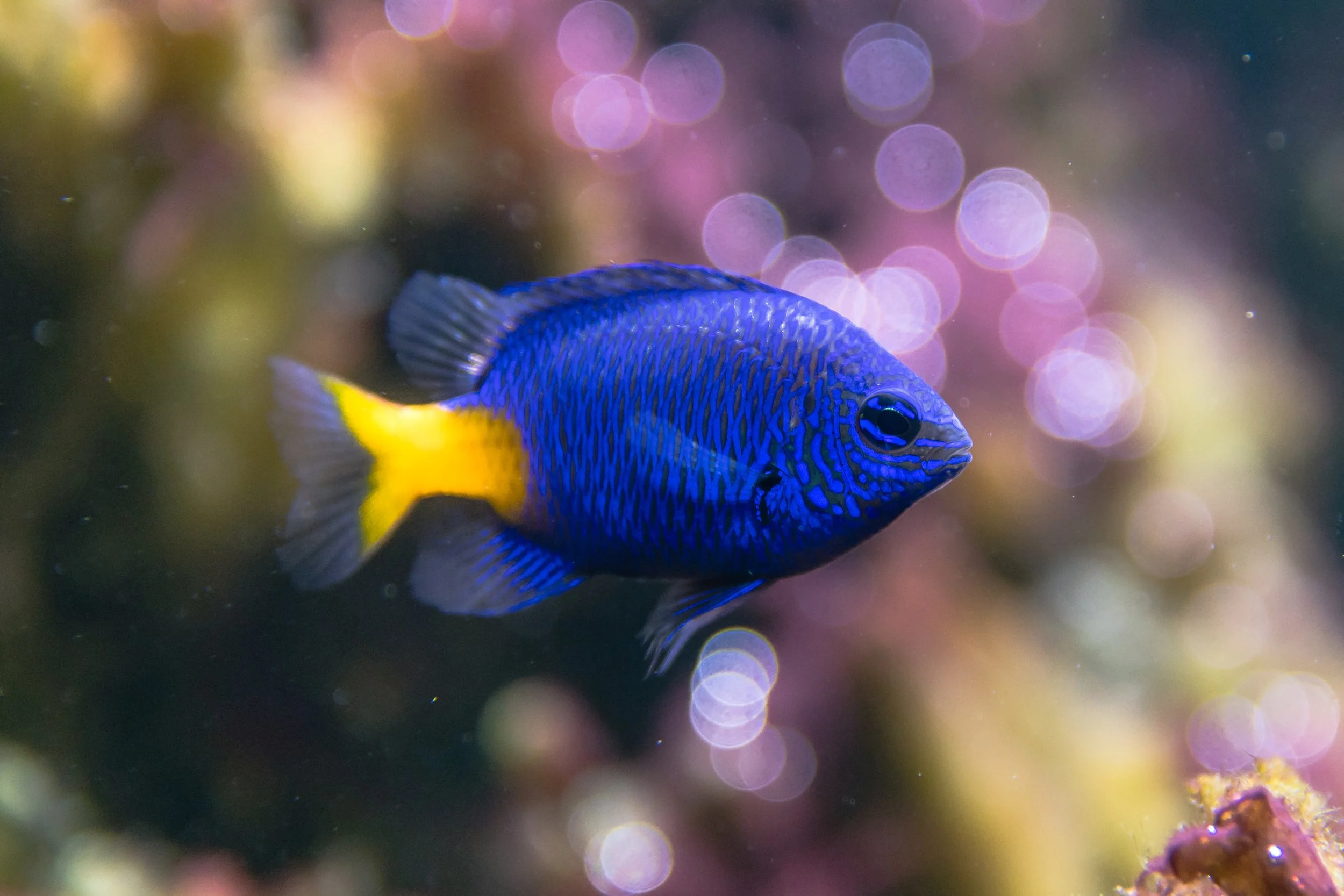
Photo Credit: Adobe Stock, by iredding01
Yellowtail Damselfish (Chrysiptera parasema) belong to the Pomacentridae family, and their territorial behavior helps structure reef communities by influencing where other fish and invertebrates settle. Fun Fact: Despite being only 3 inches long, these damselfish often act like “tank bosses,” chasing fish many times their size to defend their chosen patch of reef!
Adult Size
2.5–3 inches (6–8 cm)
Description
The Yellowtail Damselfish (Chrysiptera parasema) is a bold splash of color in any saltwater aquarium — its electric cobalt-blue body punctuated by a vibrant yellow tail. This striking contrast makes it one of the most recognizable and commonly kept damselfish in the hobby.
Hardy and highly adaptable, this species is often recommended for beginners, though its territorial nature requires thoughtful tankmate selection and aquascaping. Yellowtail Damselfish are known for staking out small territories and defending them with surprising tenacity, especially in smaller tanks or when introduced first.
Despite their semi-aggressive behavior, they can thrive in well-structured community tanks with robust companions and plenty of hiding spots. Their resilience and bold personality make them ideal for learning fish behavior, especially in fish-only systems or carefully stocked reef tanks.
Recommended Aquarium Size & Water Parameters
Yellowtail Damselfish are suitable for nano and small reef aquaria, with a recommended minimum tank size of 20–30 gallons. Stable tropical conditions and thoughtful aquascaping help reduce territorial aggression and support long-term health.
| Parameter | Range & Notes |
|---|---|
| Minimum Tank Size | 20–30 gallons; suitable for single damselfish or small groups with ample territory |
| Temperature | 75–82°F (24–28°C); stable tropical range preferred |
| Specific Gravity | 1.023–1.026; reef-safe salinity range |
| pH | 8.1–8.4; slightly basic, supports biological stability |
| Nitrate | <20 ppm (fish-only); <5–10 ppm (reef); lower levels preferred for coral health |
Reef Safety & Compatibility
Yellowtail Damselfish are semi-aggressive and territorial, especially in confined spaces or when introduced first. While they are generally reef-safe, they may pick at small corals or sessile invertebrates if overcrowded or underfed.
They do best with robust tankmates that can tolerate occasional nipping and in tanks with abundant rockwork that breaks sightlines and allows multiple territories. Avoid pairing with very peaceful or delicate species, as the damselfish may harass them persistently.
| Category | Examples | Notes |
|---|---|---|
| Ideal | Robust wrasses, larger gobies, tangs | Species that can tolerate some nipping; provide ample hiding spaces |
| Caution | Small shy fish, small inverts, delicate corals | Damselfish may bully or nip; avoid tiny or docile tankmates |
| Avoid | Very peaceful microfish and small shrimp groups | Likely to be harassed |
| Tank Layout Tip | Abundant hiding holes and multiple territories | Rockwork that breaks sightlines reduces territorial aggression |
History & Origin
Native to the Indo-Pacific, the Yellowtail Damselfish is one of the most widely kept marine fish in the hobby. Its hardiness, bold coloration, and low cost make it a common first fish for new aquarists.
While often introduced early in tank cycles, its territorial nature means it should be added with care in community setups. Captive-bred specimens are increasingly available, offering improved adaptability and reduced impact on wild populations.
Temperament & Personality
Yellowtail Damselfish are bold, assertive, and highly territorial, especially in smaller aquaria or when introduced first. They often claim a patch of rockwork or coral as their territory and will vigorously defend it against intruders. This behavior can be fascinating to observe, as it showcases natural reef dynamics, but it also means they are best housed with tankmates that can tolerate occasional nipping or chasing.
Despite their aggression, they remain active and visible, rarely hiding, which makes them engaging for aquarists. In larger tanks with abundant rockwork, their territorial instincts are diffused, and they coexist more peacefully with other species. Their confidence and resilience make them excellent “teacher fish” for beginners learning about marine social hierarchies.
Care Highlights
Diet: Omnivorous — readily accepts flakes, pellets, meaty foods, and algae-based diets. Variety improves coloration and vitality.
Tank Setup: Robust rockwork with multiple hiding holes and broken sightlines to reduce aggression.
Breeding: Spawns on rock surfaces or tiles; males guard and aerate eggs until hatching.
Health: Extremely hardy and forgiving of minor lapses in water quality.
Common Health Issues: Fin damage from territorial combat; occasional protozoan parasites if stressed.
Lifespan: 4–8 years in well-maintained aquaria.