Yellow Tang
Common Name
Yellow Tang
Scientific Name
Zebrasoma flavescens
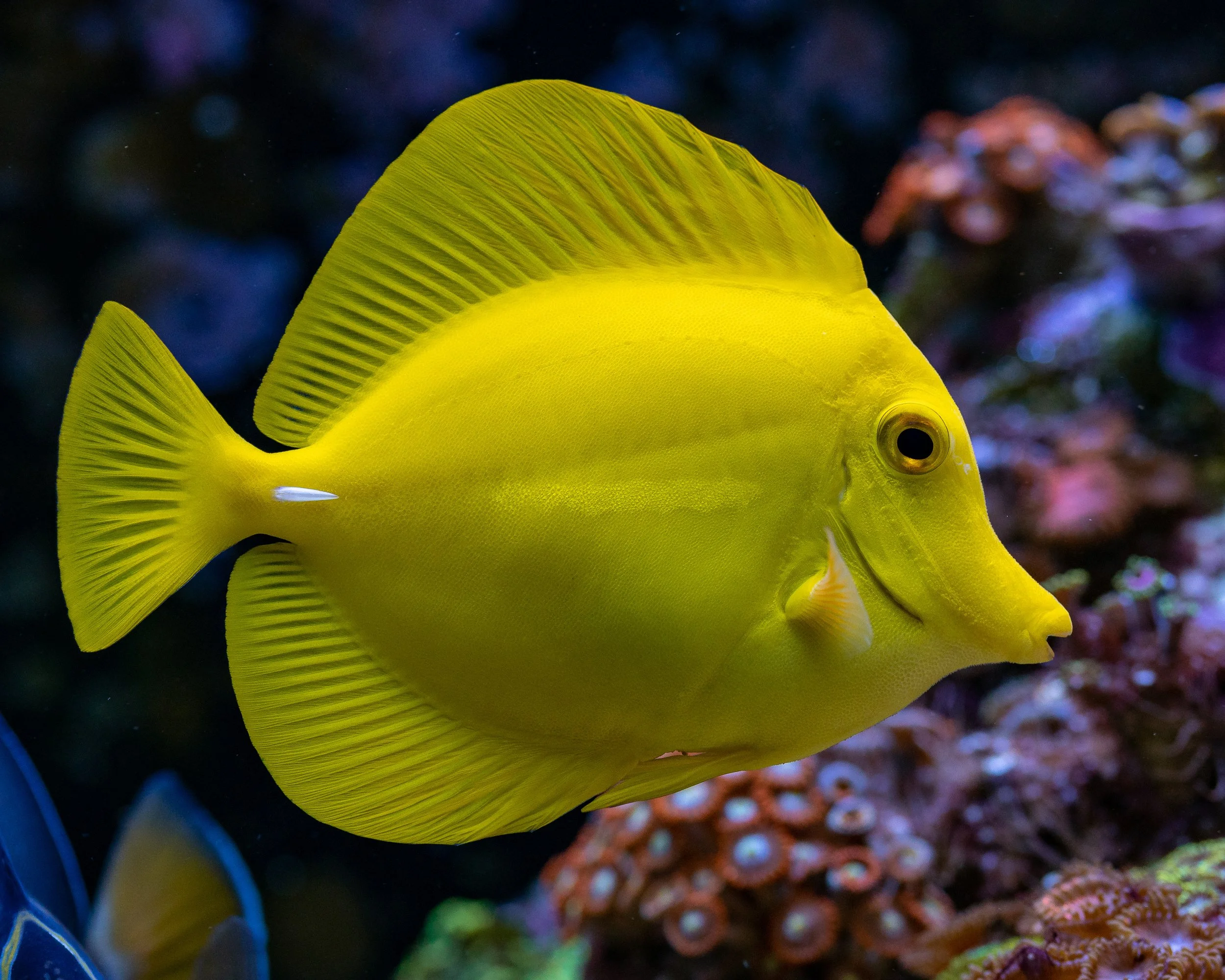
Yellow Tangs play a crucial ecological role in the wild by grazing on filamentous algae, helping maintain coral reef health and preventing algal overgrowth. Fun Fact: Despite their bold color, Yellow Tangs can “dim” their brightness at night — blending into shadows to avoid predators while they sleep!
Image courtesy of Adobe Stock, photographed by JoshSilsbury.
Adult Size
7–8 inches (18–20 cm)
Description
The Yellow Tang is one of the most iconic saltwater aquarium fish, instantly recognizable by its brilliant lemon-yellow coloration and disk-shaped body. Its streamlined form and perpetual grazing behavior make it both a functional algae controller and a vibrant centerpiece in large reef aquaria. Unlike smaller reef fish, the Yellow Tang is highly active, spending much of the day swimming in open water and browsing algae from rocks and glass.
This species is prized not only for its beauty but also for its utility — it plays a vital role in controlling nuisance algae growth in reef tanks. However, its energetic nature and territorial instincts mean it requires ample swimming space and careful tankmate selection. When housed properly, the Yellow Tang becomes a hardy, long-lived addition to marine aquaria, offering both visual appeal and ecological balance.
Recommended Aquarium Size & Water Parameters
The Yellow Tang thrives in large, well-oxygenated aquaria with abundant live rock for grazing. A minimum of 125 gallons is recommended for a single adult, as smaller tanks can lead to stress, aggression, and health issues. Stable water chemistry is essential, with tropical temperatures and reef-safe salinity maintained consistently. Strong biological filtration and regular water changes help prevent the buildup of nutrients that can compromise health.
| Parameter | Range & Notes |
|---|---|
| Minimum Tank Size | 125+ gallons; provides ample swimming space and reduces territorial aggression |
| Temperature | 75–82°F (24–28°C); stable tropical range preferred |
| Specific Gravity | 1.023–1.026; reef-safe salinity range |
| pH | 8.1–8.4; slightly basic, supports biological stability |
| Alkalinity | 8–12 dKH; maintains buffering capacity and coral health in reef systems |
| Nitrate | <20 ppm (fish-only); <5–10 ppm (reef); lower levels preferred for long-term health |
Reef Safety & Compatibility
The Yellow Tang is generally reef-safe with corals and sessile invertebrates, making it a reliable algae grazer in reef systems. However, it can be semi-aggressive toward other tangs or surgeonfish, especially those with similar body shapes. Territorial disputes are most common in smaller tanks or when multiple tangs are introduced without careful planning.
To minimize aggression, introduce tangs simultaneously in very large aquaria and ensure ample swimming lanes and grazing surfaces. Avoid housing with overly aggressive species such as large angels or predatory fish that may harass the tang.
| Category | Examples | Notes |
|---|---|---|
| Ideal | Large wrasses, clownfish, tang-compatible fish, large gobies | Provide lots of swimming space and varied algae diet |
| Caution | Other Zebrasoma species, similarly shaped tangs | Introduce simultaneously to reduce territorial fights; ensure very large tank |
| Avoid | Small invertebrates if tank underfed; aggressive angels | May nip slow-moving or long-finned fish when stressed |
| Tank Layout Tip | Open swimming lanes, live rock for grazing | Maintain strong biological filtration and ample algae supply |
History & Origin
The Yellow Tang is native to the Pacific Ocean, with its highest concentrations around the Hawaiian Islands, though its range extends across the Indo-Pacific. Historically, it was one of the most heavily collected marine fish for the aquarium trade, leading to concerns about wild population sustainability.
In recent years, advances in aquaculture have made captive-bred Yellow Tangs increasingly available, reducing pressure on wild stocks and ensuring more sustainable options for aquarists. Captive-bred specimens are often hardier and better adapted to aquarium life, making them preferable when available.
Temperament & Personality
Yellow Tangs are active, diurnal grazers that spend most of their time swimming in open water and browsing algae. They are highly visible and rarely hide, making them a dynamic presence in the aquarium. While generally peaceful toward non-tang species, they can become territorial with conspecifics or similar-shaped fish, especially in confined spaces.
Care Highlights
Diet: Primarily herbivorous — marine algae, Nori sheets, spirulina-based foods; occasional meaty supplements (mysis, brine) for variety.
Tank Setup: Large aquaria with open swimming lanes and abundant live rock for grazing; strong flow and oxygenation.
Breeding: Spawns in the wild; captive breeding achieved in specialized facilities but rare in home aquaria.
Health: Susceptible to parasitic infections (e.g., marine ich) when stressed; quarantine strongly recommended before introduction.
Common Health Issues: Marine ich (Cryptocaryon irritans); Head and Lateral Line Erosion (HLLE) linked to poor diet and water quality.
Lifespan: 10+ years in well-maintained aquaria.