African Butterfly Fish
Common Name
African Butterfly Fish, Freshwater Butterfly Fish
Scientific Name
Pantodon buchholzi
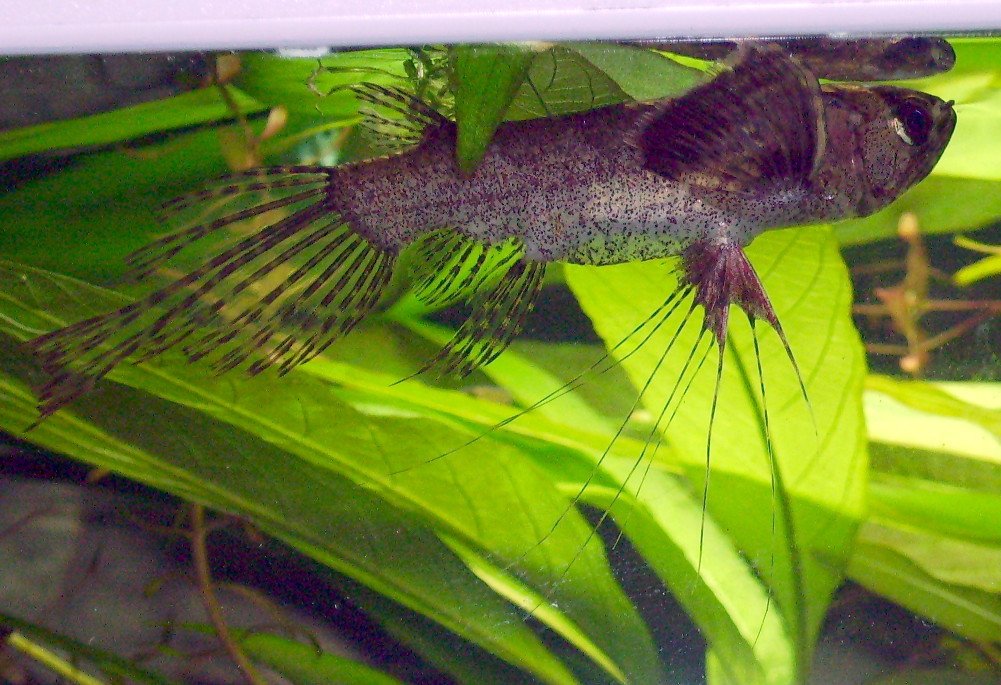
The African Butterfly Fish (Pantodon buchholzi) is a striking surface-dweller with a prehistoric silhouette and wing-like pectoral fins that spread wide like a glider. Its flattened body is mottled brown and tan, camouflaging perfectly among floating plants and leaf litter. The upturned mouth and large, lidless eyes give it a vigilant, almost reptilian expression. When still, it hovers just beneath the surface, fins extended like a butterfly in flight; when startled, it can leap or glide short distances above the water. This fish embodies quiet elegance and evolutionary precision, a living fossil adapted for ambush and aerial escape. Fun fact: Those dramatic fins aren’t just for show—this fish can leap and glide short distances above the water, earning its name and baffling aquarists who forget to secure their tank lids.
By Toniher - photo taken by Toniher, CC BY-SA 3.0, https://commons.wikimedia.org/w/index.php?curid=1334377
Adult Size:
4–5 inches (10–13 cm)
Recommended Group Size:
Solo or peaceful surface dwellers
Experience Level:
Intermediate
Recommended Aquarium Size and Water Parameters
Freshwater butterfly fish are surface-dwelling ambush predators with wide, wing-like pectoral fins and a tendency to leap. Because they rarely venture below the top few inches of the tank, horizontal swimming space is far more important than depth. A long, shallow aquarium—ideally 30 to 40 gallons (110–150 liters)—provides the surface area they need to glide, hunt, and breathe comfortably.
These fish are solitary and territorial at the surface, so a larger footprint helps reduce stress and aggression. Tanks should be well-covered to prevent escape, as butterfly fish are known jumpers. Floating plants and dim lighting help mimic their natural habitat and encourage calm behavior.
| Parameter | Range |
|---|---|
| Temperature | 75–82°F (24–28°C) |
| pH | 6.0–7.5 |
| Hardness | 5–15 dGH |
| Ammonia/Nitrite | 0 ppm |
| Nitrate | <20 ppm |
| Oxygenation | High surface oxygen; minimal surface film |
| Flow | Gentle surface movement; avoid turbulence |
| Lighting | Dim or shaded; floating plants preferred |
Compatible Tank Mates
Freshwater butterfly fish are surface-dwelling ambush predators with a slow, hovering presence and a surprisingly large mouth. While peaceful toward similarly sized tank mates, they will opportunistically consume anything small enough to fit in their jaws—especially surface-oriented fish like guppies, hatchetfish, or small rasboras.
Ideal companions are peaceful, robust species that occupy the lower or middle zones of the aquarium. These fish should be large enough to avoid predation and calm enough not to provoke stress or competition. Butterfly fish are solitary by nature, so tank mates should not crowd the surface or compete for air access.
Avoid pairing with:
Small fish under 2 inches (5 cm)
Surface swimmers or fast feeders
Fin-nippers or aggressive species
Hyperactive schooling fish that may startle or stress butterfly fish
Floating plants, dim lighting, and a well-covered tank help reduce anxiety and support natural behavior. Butterfly fish do not school and rarely tolerate others of their kind unless the tank is very large.
| Compatible Species | Notes |
|---|---|
| Congo Tetras | Mid-level swimmers; large enough to avoid predation |
| Corydoras Catfish | Peaceful bottom dwellers; no surface competition |
| Synodontis Species | Robust and bottom-oriented; compatible temperament |
| Polypterus (small species) | Slow-moving, bottom-dwelling; similar water needs |
| Dwarf Cichlids (e.g., Apistogramma) | Territorial but bottom-focused; avoid aggressive strains |
| Avoid: guppies, hatchetfish, fin-nippers | May be eaten or provoke stress |
History and Origin
The freshwater butterfly fish (Pantodon buchholzi) is native to the warm, slow-moving waters of West and Central Africa, where it inhabits tranquil rivers, swampy pools, and seasonal floodplains. These environments are rich in floating vegetation, leaf litter, and dim lighting—perfectly suited to the butterfly fish’s surface-dwelling, ambush-hunting lifestyle.
First described scientifically in the late 19th century, Pantodon buchholzi quickly gained attention for its distinctive morphology: broad, wing-like pectoral fins and an upturned mouth adapted for surface feeding. These fins aren’t just ornamental—they allow the fish to leap and glide short distances above the water, a behavior that inspired its common name and continues to fascinate aquarists today. In the wild, this gliding ability likely evolved as a predator evasion tactic or a method for navigating fragmented floodplain habitats.
By the early 20th century, butterfly fish had entered the aquarium trade, prized for their prehistoric appearance, calm demeanor, and unique surface behavior. Their lineage is ancient, with no close relatives in the hobby, making them a living fossil of sorts—unchanged in form and function for millions of years. Despite their popularity, they remain somewhat niche due to their specialized care needs and incompatibility with small or fast-moving tank mates.
Today, most butterfly fish in the hobby are captive-bred, though wild imports still occur. Their presence in aquariums offers a glimpse into Africa’s rich aquatic biodiversity and a reminder of the evolutionary adaptations that shape fish behavior and anatomy. With proper care, they reward aquarists with graceful surface gliding, slow-motion hunting, and a quiet elegance that sets them apart from more conventional species.
Temperament and Personality
Freshwater butterfly fish are calm, deliberate, and highly specialized surface predators. Their behavior is shaped by a lifetime spent just beneath the water’s surface, where they hover motionless among floating plants, waiting for unsuspecting prey. This ambush-hunting instinct defines their personality: they are not aggressive in the traditional sense, but they are opportunistic and highly reactive to movement near the surface.
Despite their predatory nature, butterfly fish are peaceful toward tank mates that stay out of their territory—namely, the uppermost layer of the aquarium. They coexist well with bottom- and mid-dwelling species that don’t compete for space or food. However, they can become territorial or stressed when housed with other surface-oriented fish, especially those that are fast-moving, flashy, or similarly shaped. In such cases, they may lash out or retreat into hiding.
Their prehistoric appearance—with large, wing-like pectoral fins and a slow, hovering posture—belies their agility. Butterfly fish are powerful jumpers, capable of launching themselves several inches above the water to escape threats or chase prey. This makes a tight-fitting, escape-proof lid absolutely essential. Even small gaps can lead to fatal leaps, especially in tanks with sudden lighting changes or disturbances.
When kept in a well-structured, low-stress environment, butterfly fish display a quiet elegance. They glide across the surface with minimal effort, occasionally flaring their fins in a display that resembles a butterfly in flight. Their movements are slow and deliberate, and they often remain still for long periods, blending into the shadows of floating plants. Observing their behavior is a study in patience, precision, and the subtle beauty of evolutionary design
Other Pertinent Information
Diet: Carnivorous surface feeder; prefers live or frozen insects (crickets, flies, mosquito larvae), small shrimp, and floating pellets. Avoid sinking foods—they rarely venture below the surface.
Tank Setup: Long, shallow tanks with floating plants and subdued lighting are ideal. Use a secure, tight-fitting lid to prevent escape. Keep surface calm with minimal flow.
Behavioral Needs: Solitary surface ambusher; does not school. Avoid surface competition. Needs open areas for gliding and shaded zones for resting.
Breeding: Surface egg scatterer. Breeding possible with soft, acidic water, floating plants, and lowered water level. Eggs hatch in 3–4 days; fry require tiny live foods and gentle conditions.
Health: Sensitive to poor water quality and strong medications. Prone to Ich, stress-related infections, and physical injury from jumping. Long fins are vulnerable to fin-nippers.
Lifespan: Typically 5–7 years with stable care and minimal stress.
Size: Adults reach 4–5 inches (10–13 cm); wide pectoral fins give a larger visual footprint.