Kuhli Loach
Common Name
Kuhli Loach, Coolie Loach, Leopard Loach
Scientific Name
Pangio kuhlii
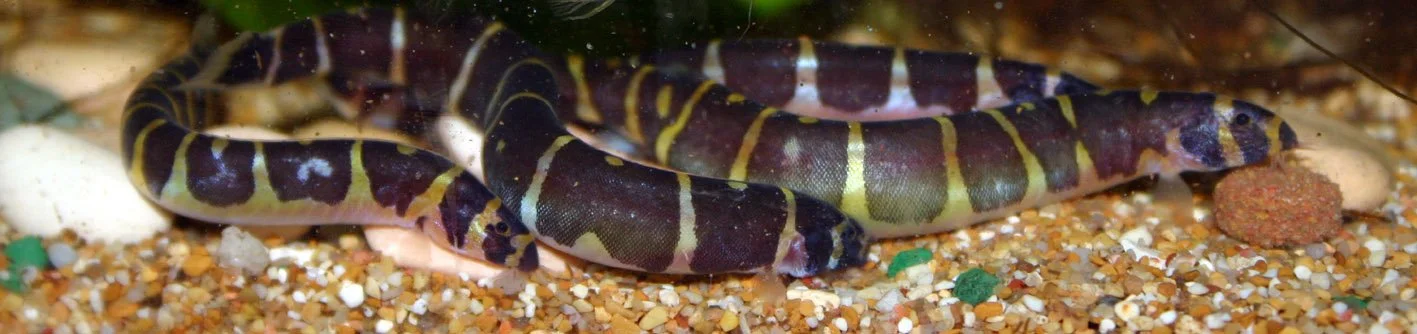
By The original uploader was Marrabbio2 at Italian Wikipedia. - Own work by the original uploader, CC BY-SA 3.0, https://commons.wikimedia.org/w/index.php?curid=7009692
Adult Size:
3–4 inches (7.5–10 cm)
Recommended Group Size:
6+
Experience Level:
Beginner to Intermediate
Recommended Aquarium Size and Water Parameters
| Parameter | Range |
|---|---|
| Minimum Tank Size | 20 gallons (75 liters) for a group |
| Temperature | 73–80°F (23–27°C) |
| pH | 5.5–7.5 |
| Hardness | 1–10 dGH (ideally soft water) |
Compatible Tank Mates
Kuhli loaches are shy, bottom-dwelling scavengers that thrive in peaceful, well-planted community tanks. Their nocturnal habits and gentle nature make them ideal companions for small, non-aggressive fish that occupy different zones of the aquarium.
Best tank mates are species that:
Are similarly sized or smaller
Avoid territorial or fin-nipping behavior
Prefer soft, slightly acidic water
Don’t compete aggressively for food
Kuhlis do best in groups of 4–6 or more, and they often hide during the day, emerging at dusk to forage. Fast-moving mid-level fish like rasboras and tetras help create a dynamic but non-threatening environment. Corydoras are especially compatible, sharing the bottom zone without conflict.
Avoid housing kuhli loaches with:
Large or boisterous fish (e.g., oscars, convicts)
Fin-nippers (e.g., tiger barbs)
Predatory or territorial cichlids
Overly active species that may outcompete them for food
Visual barriers, soft substrate, and low lighting help reduce stress and support natural behavior.
| Compatible Species | Notes |
|---|---|
| Small tetras (e.g., ember, neon) | Peaceful mid-level swimmers; non-aggressive |
| Rasboras (e.g., harlequin, chili) | Fast, peaceful, and visually engaging |
| Corydoras catfish | Bottom dwellers; share space without conflict |
| Dwarf gouramis | Peaceful surface dwellers; avoid aggressive strains |
| Avoid: large cichlids, tiger barbs, aggressive fish | May harass, outcompete, or injure kuhli loaches |
Water Parameters
Kuhli loaches thrive in soft, slightly acidic water that mimics their native Southeast Asian habitats. Stability is key—sudden changes in temperature, pH, or hardness can cause stress or illness. Gentle flow, high oxygenation, and pristine conditions support their health and natural behavior.
| Parameter | Range |
|---|---|
| Temperature | 73–80°F (23–27°C) |
| pH | 5.5–7.5 |
| Hardness | 1–10 dGH (ideally soft water) |
| Ammonia/Nitrite | 0 ppm |
| Nitrate | <20 ppm |
History / Origin
Kuhli loaches (Pangio kuhlii) are native to the warm, slow-moving streams, rice paddies, and floodplains of Southeast Asia—particularly Indonesia, Malaysia, and parts of Thailand. These habitats are rich in leaf litter, soft substrate, and dense vegetation, creating the perfect environment for their secretive, bottom-dwelling lifestyle.
Historically, kuhli loaches were collected not for ornamental purposes, but as a local food source in rural communities. Their small size and abundance made them a practical protein option in subsistence fishing. Over time, however, their unique eel-like shape, peaceful temperament, and curious behavior caught the attention of aquarists around the world.
By the mid-20th century, kuhli loaches had become a staple in the freshwater aquarium trade. Their ability to coexist peacefully in community tanks, combined with their nocturnal foraging and endearing group behaviors, made them a favorite among hobbyists seeking subtle, naturalistic setups. Today, most specimens are captive-bred, helping reduce pressure on wild populations and ensuring better adaptation to aquarium life.
Despite their popularity, kuhli loaches remain somewhat mysterious—often hiding during the day and revealing their playful personalities only under low light or in the company of their own kind. Their history reflects a quiet evolution from overlooked food fish to beloved aquarium companion, valued for both their ecological origins and their gentle charm.
Temperament and Personality
Kuhli loaches are gentle, secretive, and highly social bottom dwellers that thrive in calm, well-structured environments. Their temperament is best described as shy but communal—they prefer to stay out of sight during the day, often burrowing into soft substrate, wedging themselves into crevices, or nestling beneath driftwood and dense plant cover. This cryptic behavior isn’t a sign of stress, but a natural adaptation to their wild habitats, where camouflage and shelter are essential for survival.
As nocturnal foragers, kuhli loaches become most active at dusk and during nighttime hours. When kept in groups of five or more, they display fascinating social behaviors, including synchronized swimming, gentle nudging, and the formation of “loach piles”—a charming behavior where multiple individuals curl up together in a single hiding spot or rest in a tangled cluster. These interactions help reduce stress and encourage natural movement patterns.
Despite their peaceful nature, kuhli loaches are surprisingly inquisitive. Once acclimated, they may explore open areas of the tank, especially during feeding time or under dim lighting. Their snake-like motion and flexible bodies allow them to navigate tight spaces with ease, making them excellent scavengers in planted aquascapes.
They rarely show aggression, even when competing for food, and are generally tolerant of other peaceful species. However, they can be startled by sudden movements or loud disturbances, so a quiet environment with gradual lighting changes is ideal. Their comfort and confidence increase dramatically when housed in a stable group with plenty of hiding spots and soft substrate.
Other Pertinent Information
Diet: Omnivorous scavengers; thrive on sinking wafers, micro-pellets, frozen bloodworms, brine shrimp, and occasional live foods. Supplement with vegetable matter like blanched spinach or zucchini.
Tank Setup: Requires soft, sandy substrate to prevent injury. Provide dense planting, driftwood, leaf litter, and caves for shelter. Subdued lighting and gentle flow mimic natural conditions.
Behavioral Needs: Nocturnal and highly social; happiest in groups of 5 or more. Exhibits playful “loach pile” behavior and benefits from visual barriers to reduce stress.
Breeding: Rare in home aquariums. Triggered by cool water changes and live food. Eggs are laid on plants; fry need infusoria and microfoods. Sexing is difficult and spawning is often hidden.
Health: Sensitive to poor water quality and medications. Prone to Ich, skin infections, and stress-related illness. Scaleless bodies require careful dosing and pristine conditions.
Lifespan: Typically 10+ years with proper care and stable water parameters.
Size: Adults reach 3–4 inches (7–10 cm); slender, eel-like body allows for agile movement through substrate and décor.