Apistogramma
Common Name
Cockatoo Dwarf Cichlid
Scientific Name
Apistogramma cacatuoides
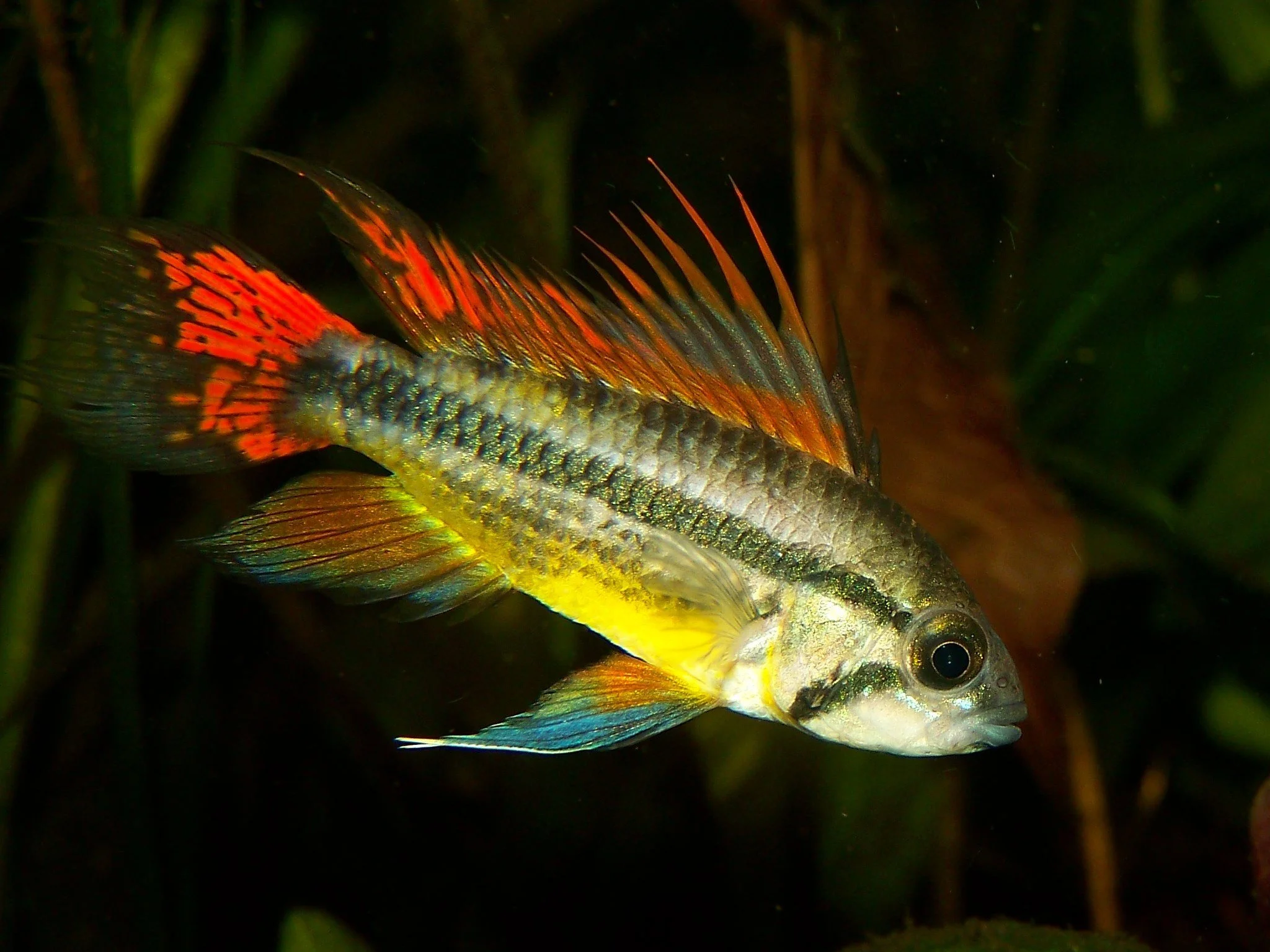
Apistogramma cacatuoides, commonly known as the Cockatoo Dwarf Cichlid, is a sexually dimorphic species native to the Amazon basin. Males develop elongated fin rays and vibrant coloration, while females remain smaller and more cryptically patterned. Fun Fact: The Cockatoo Dwarf Cichlid gets its name from the male’s dramatic dorsal fin — it flares like a cockatoo’s crest during courtship and territorial displays, adding flair to every aquarium standoff.
By William Kreijkes - Own work, CC BY-SA 3.0, https://commons.wikimedia.org/w/index.php?curid=4459415
Adult Size:
2.5–3.5 inches (6–9 cm)
Recommended Group Size:
1 male with 2–3 females
Experience Level:
Intermediate
Recommended Aquarium Size and Water Parameters
Apistogramma cacatuoides, commonly known as the Cockatoo Dwarf Cichlid, is a vibrant, intelligent, and behaviorally complex species native to the slow-moving tributaries of the Amazon basin. While relatively small in size, their territorial instincts and social dynamics demand thoughtful space planning and stable water conditions.
Minimum Tank Size: A 20-gallon (75-liter) tank is suitable for a single bonded pair, provided there are ample hiding spots and visual barriers. For harem setups (one male with multiple females) or community tanks, a minimum of 40 gallons (150+ liters) is recommended to reduce aggression and allow for territory establishment.
Temperature: These cichlids thrive in tropical temperatures between 75–82°F (24–28°C). Slight seasonal fluctuations can be tolerated, but stability is key for long-term health and breeding success.
pH Range: Native to soft, slightly acidic waters, they prefer a pH of 5.5–7.0. While they can adapt to neutral conditions, acidic environments better support natural behavior, coloration, and spawning.
Water Hardness: Ideal hardness is 1–10 dGH, with lower values preferred for breeding. Soft water mimics their native habitat and supports egg viability.
Filtration & Flow: Gentle filtration with low to moderate flow is ideal. Strong currents can stress them and disrupt territorial boundaries.
Aquascape Considerations: Use fine sand substrate, leaf litter, driftwood, and dense planting to create visual breaks and secure hiding zones. Floating plants help diffuse light and reduce stress.
| Parameter | Recommended Range |
|---|---|
| Minimum Tank Size | 20 gallons (single pair); 40+ gallons for harem/community |
| Temperature | 75–82°F (24–28°C) |
| pH | 5.5–7.0 (soft, slightly acidic) |
| Hardness | 1–10 dGH (low preferred) |
Compatible Tank Mates
The Cockatoo Dwarf Cichlid (Apistogramma cacatuoides) is a semi-territorial, intelligent species that thrives in peaceful, well-structured Amazonian communities. While males may display dominance during breeding, they coexist well with non-aggressive, midwater fish that don’t compete for territory or provoke aggression.
Ideal Companions:
Peaceful Tetras (e.g., Ember, Neon, Rummy-nose): fast enough to avoid conflict, visually complementary
Pencilfish (Nannostomus spp.): slender, surface-oriented, and behaviorally passive
Corydoras Catfish (especially dwarf species): bottom-dwellers that avoid cichlid territories and help clean substrate
Hatchetfish & Otocinclus: excellent top and algae-cleaning companions in larger setups
Other Small Amazonian Species: such as Dicrossus, Nannacara, or Hyphessobrycon species
Tank Mate Traits to Avoid:
Large or aggressive cichlids (e.g., angelfish, convicts, or rams in small tanks)
Fin-nippers or hyperactive fish that may stress Apistos or provoke territorial behavior
Shrimp: may be preyed upon, especially during breeding or in tanks with juveniles
Behavioral Notes:
Apistogramma males may become territorial during spawning, so visual barriers and space are essential.
In harem setups, ensure multiple females have separate hiding zones to reduce harassment.
Avoid overcrowding; even peaceful tank mates can trigger stress if space is limited.
| Species | Compatibility Notes |
|---|---|
| Ember Tetras | Peaceful midwater swimmers; fast enough to avoid territorial conflict |
| Pencilfish | Surface-oriented and passive; ideal for layered aquascapes |
| Corydoras Catfish | Bottom-dwellers that avoid Apisto territories; help clean substrate |
| Otocinclus | Algae grazers; peaceful and unobtrusive |
| Hatchetfish | Top-dwelling and peaceful; add movement without competition |
| Small Amazonian Tetras | Compatible in larger setups; avoid fin-nipping species |
History / Origin
First described by Hoedeman in 1951, Apistogramma cacatuoides is native to the Ucayali, Amazon, and Solimões river systems in Peru, Colombia, and western Brazil. It inhabits slow-moving forest streams, shallow lagoons, and seasonal floodplains, where the substrate is rich in decaying leaf litter, submerged branches, and soft sand. These environments offer both camouflage and nesting sites, supporting the species’ cave-spawning behavior and maternal brood care.
Unlike many Apistogramma species that prefer blackwater conditions, A. cacatuoides is more adaptable, thriving in clearwater and whitewater tributaries with slightly acidic to neutral pH and soft to moderately hard water. This ecological flexibility has contributed to its success in captivity, making it one of the most commonly bred Apistogrammas worldwide.
In the wild, males exhibit striking sexual dimorphism, with elongated dorsal rays and vivid red, orange, or yellow fin markings. Females are smaller and more cryptically colored, but display bright yellow hues during spawning and fry protection. These traits, combined with their intelligent behavior and strong parental instincts, have made A. cacatuoides a favorite among aquarists seeking both beauty and personality.
Selective breeding has further enhanced their appeal, producing intensified color morphs such as “Double Red,” “Triple Red,” and “Orange Flash.” Despite these ornamental strains, wild-type forms remain prized for their natural elegance and hardiness.
Today, the Cockatoo Dwarf Cichlid is considered an ideal entry point into the Apistogramma genus, offering a balance of robustness, manageable aggression, and rewarding breeding behavior. Its rise in popularity reflects a broader appreciation for biotope-inspired aquascaping and species-specific care, especially among aquarists focused on ethical, behaviorally rich setups.
Temperament and Personality
The Cockatoo Dwarf Cichlid (Apistogramma cacatuoides)** is a charismatic, intelligent species known for its complex social behavior, expressive body language, and remarkable parental care. Unlike many larger cichlids, this species balances boldness with restraint, making it a favorite among aquarists seeking personality without excessive aggression.
Social Intelligence:
These fish establish clear social hierarchies, especially in harem setups or community tanks.
Males often patrol territories with confidence, while females display nuanced behaviors during courtship, nesting, and fry protection.
Territorial Behavior:
Males are mildly territorial, particularly during breeding, but far less aggressive than many cichlid species.
Aggression is typically limited to short displays or chases, especially when space and cover are adequate.
Courtship & Breeding:
Courtship involves vibrant fin displays, body quivering, and color intensification.
Females become bright yellow when guarding eggs or fry, often retreating to caves or leaf litter to protect their brood.
Both sexes exhibit parental care, with females taking the lead in guarding and guiding fry.
Daily Behavior:
Outside of breeding, A. cacatuoides are curious and interactive, often exploring their environment and responding to human presence.
They thrive in structured tanks with visual barriers, which reduce stress and allow natural behaviors to emerge.
Compatibility Notes:
Best kept with peaceful, midwater species that don’t provoke territorial instincts.
In harem setups, ensure ample space and hiding zones to prevent female harassment.
Other Pertinent Info
Care Highlights
The Cockatoo Dwarf Cichlid (Apistogramma cacatuoides)** is a behaviorally rich species that flourishes in aquariums designed to mimic its native Amazonian habitat. To support its health, coloration, and natural behaviors:
Substrate & Decor: Use fine sand to allow for substrate-sifting and protect delicate fins. Include multiple cave-like shelters (e.g., coconut halves, pleco caves, driftwood crevices) to support territory formation and spawning.
Water Conditions: Maintain soft, slightly acidic water (pH 5.5–7.0, hardness 1–10 dGH) with leaf litter and tannins to simulate natural conditions and enhance coloration.
Lighting & Flow: Provide subdued lighting and gentle flow. Floating plants help diffuse light and reduce stress.
Diet: Offer a varied diet of high-quality pellets, flakes, and live/frozen foods such as brine shrimp, bloodworms, and daphnia. Feeding small amounts 2–3 times daily supports digestion and reduces waste.
Breeding Notes
Breeding A. cacatuoides is highly rewarding and showcases their complex social and parental behaviors:
Harem Structure: A single male with 2–3 females works well in tanks 40 gallons or larger. Each female should have access to her own cave.
Spawning Behavior: Females lay eggs on the ceilings of caves, often choosing dark, secluded spots. Males guard the broader territory while females defend the nest.
Fry Development: Eggs hatch in 2–3 days, and fry become free-swimming around day 7. Initial feeding should include infusoria, microworms, or vinegar eels, followed by baby brine shrimp.
Water Quality: Success depends on soft, pristine water with minimal fluctuations. Remove the male or relocate fry post-hatch to prevent predation and maximize survival.
⚠️ Common Health Issues
While hardy in stable conditions, Apistogramma cacatuoides is sensitive to environmental stressors:
Water Hardness & Pollution: Exposure to hard water or elevated nitrates can lead to skin flukes, fungal infections, and reduced spawning success.
pH Instability: Sudden pH shifts can cause stress, immune suppression, and fry mortality. Use natural buffers like catappa leaves or peat to stabilize conditions.
Stress Triggers: Overcrowding, poor aquascaping, or aggressive tank mates may lead to chronic hiding, reduced feeding, and territorial aggression.
Disease Susceptibility: Watch for signs of fin rot, columnaris, or “belly sliders” in fry, often linked to poor water quality or inadequate nutrition.