Elephant Nose Fish
Common Name
Elephant Nose Fish, Peters’ Elephant Nose Fish, Ubangi Mormyrid
Scientific Name
Gnathonemus petersii
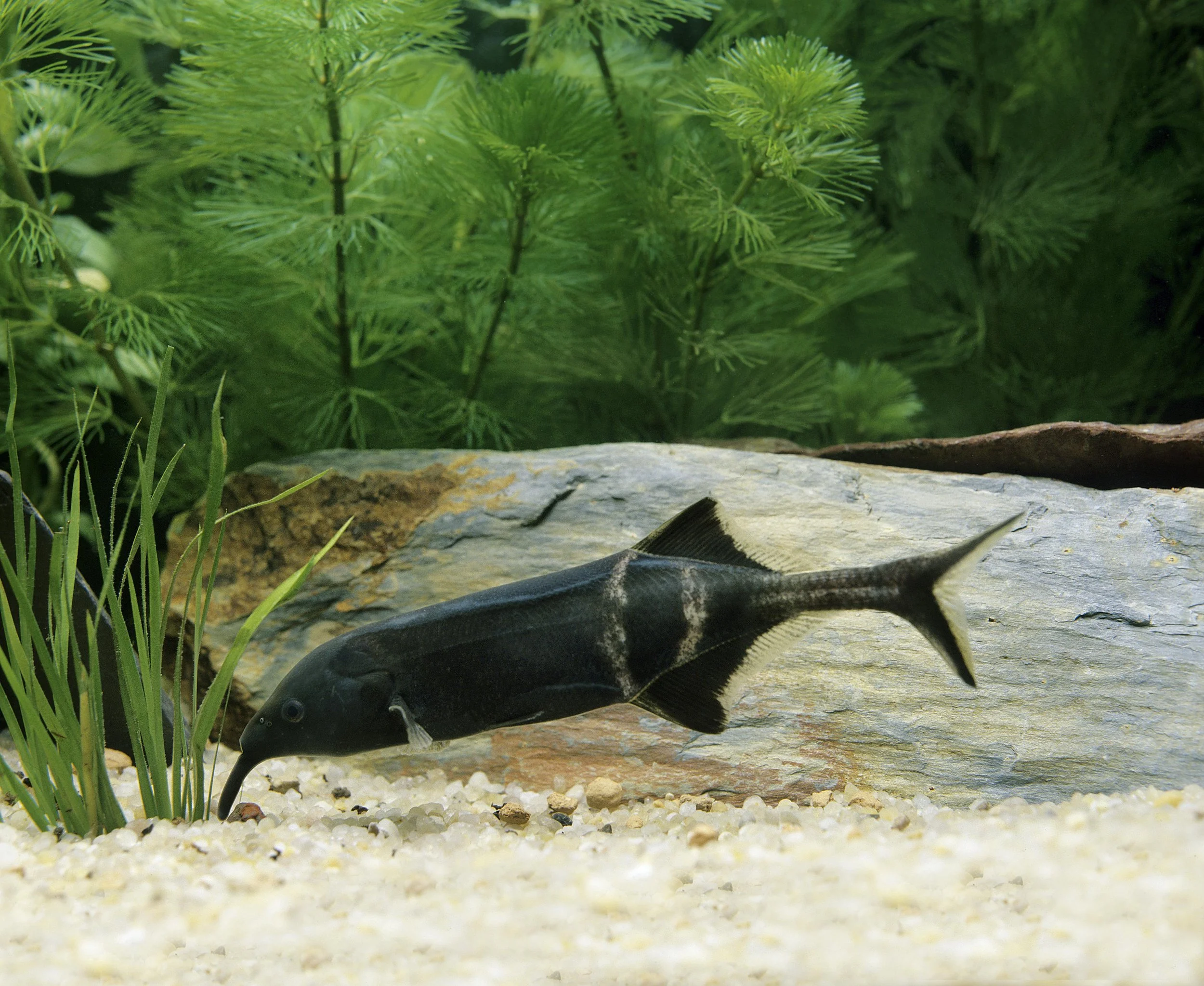
Gnathonemus petersii, also known as the Elephantnose Fish, uses a specialized organ in its elongated chin-like appendage to generate weak electric fields for navigation and communication in murky waters. Fun fact: its brain-to-body mass ratio rivals that of humans — making it one of the most neurologically advanced fish in the world!
Adult Size:
9 inches (23 cm)
Recommended Group Size:
Solo only
Experience Level:
Advanced
Recommended Aquarium Size and Water Parameters
Gnathonemus petersii, commonly known as the Elephantnose Fish, is a fascinating, electrosensory species native to the slow-moving, murky rivers of West and Central Africa. Despite its slender build, this fish requires ample space, stable water chemistry, and low-stress conditions to thrive.
Minimum Tank Size: A 50–75 gallon (190–280 liter) tank is recommended for a single adult, due to its active swimming behavior, sensitivity to water quality, and need for territory. Larger tanks are essential for groups or mixed-species setups, with visual barriers to reduce stress.
Temperature: Maintain a tropical range of 75–82°F (24–28°C). Consistent warmth supports metabolic function and electrolocation accuracy. Avoid sudden drops or seasonal swings.
pH Range: Ideal pH is 6.5–7.4, mimicking the slightly acidic to neutral conditions of its native habitat. Stability is more important than precision — avoid abrupt changes.
Water Hardness: Prefers soft to moderately hard water, ideally 5–12 dGH. Excessive hardness can impair sensory function and increase stress.
Filtration & Flow: Use gentle, well-oxygenated filtration. Elephantnose Fish dislike strong currents and benefit from calm zones with fine substrate and shaded areas.
Lighting: Keep lighting dim or diffused. These fish are crepuscular and rely on electrolocation more than vision. Floating plants or subdued LEDs help reduce stress.
Aquascape Considerations: Provide fine sand substrate for foraging, driftwood, rock caves, and dense planting to create secure, shaded zones. Avoid sharp decor that could damage their sensitive trunk-like appendage.
| Parameter | Recommended Range |
|---|---|
| Minimum Tank Size | 50–75 gallons (190–280 liters) solo |
| Temperature | 75–82°F (24–28°C) |
| pH | 6.5–7.4 |
| Hardness | 5–12 dGH |
Compatible Tank Mates
The Elephantnose Fish (Gnathonemus petersii)** is a sensitive, electrosensory species that requires a calm, low-stress environment with non-aggressive, non-competitive tank mates. Its reliance on weak electrical signals for navigation and feeding makes it vulnerable to interference from other electric fish and overstimulation from boisterous species.
Ideal Companions:
Congo Tetras: Peaceful, fast-swimming midwater fish native to the same region; visually striking and behaviorally compatible.
Corydoras Catfish: Bottom-dwellers that avoid competition and help clean substrate without disturbing the Elephantnose’s foraging.
Select Synodontis Species: Only smaller, peaceful types like Synodontis nigriventris (Upside-down Catfish); avoid larger or territorial varieties.
Tank Mate Traits to Avoid:
Other Elephantnose Fish or Electric Species: Their electrolocation signals can interfere with each other, causing stress or disorientation.
Aggressive or Boisterous Fish: Cichlids, barbs, or hyperactive schooling fish may outcompete for food or provoke defensive behavior.
Fast-feeding or surface-dominant species: These can intimidate or outpace the Elephantnose during feeding, leading to malnutrition.
Behavioral Notes:
Elephantnose Fish are nocturnal and shy, often retreating to shaded areas during the day.
They prefer structured aquascapes with visual breaks and soft substrate for safe foraging.
Feeding should be targeted and slow — avoid competitive environments where food is consumed too quickly.
| Species | Compatibility Notes |
|---|---|
| Congo Tetras | Peaceful midwater swimmers; visually compatible and behaviorally non-threatening |
| Corydoras Catfish | Bottom-dwellers that avoid competition; help clean substrate without disturbing foraging |
| Synodontis nigriventris | Small, peaceful catfish; avoid larger or territorial Synodontis species |
| Other Elephantnose Fish | Not recommended; electrolocation signals may interfere and cause stress |
| Boisterous or Aggressive Fish | Should be avoided; may outcompete for food or provoke defensive behavior |
History / Origin
First described by Albert Günther in 1862, Gnathonemus petersii belongs to the family Mormyridae, a group of African freshwater fish known for their ability to generate and interpret weak electric fields. This species is found in the lower Niger River basin, Ogun River, and upper Chari River, where waters are often muddy, dimly lit, and rich in organic debris.
Its most distinctive feature is the schnauzenorgan, a trunk-like extension of the mouth covered in electroreceptors. This organ is not a nose, but a highly sensitive tool used for navigation, prey detection, and communication. The Elephantnose Fish generates weak electric pulses using specialized cells called electrocytes, located in its tail. These pulses create a field that helps the fish detect distortions caused by nearby objects, living organisms, or changes in substrate conductivity.
In the wild, G. petersii uses this electrolocation system to root through leaf litter and mud in search of worms, insect larvae, and other invertebrates. It’s primarily nocturnal, relying on its electric sense rather than vision, which is limited in turbid waters. This adaptation allows it to thrive in environments where most fish would struggle to hunt or avoid predators.
Remarkably, Gnathonemus petersii has one of the highest brain-to-body oxygen consumption ratios of any known vertebrate — a reflection of its advanced neural processing required for electrosensory interpretation. This neurological sophistication has made it a subject of scientific study in fields ranging from neurobiology to robotics.
In the aquarium hobby, the Elephantnose Fish is both admired and misunderstood. While its intelligence and unique behavior attract enthusiasts, its sensitivity to water quality, lighting, and tank mates make it a challenging species for beginners. It prefers dim lighting, soft substrate, and quiet tank environments, and should never be housed with other electric fish due to signal interference.
Temperament and Personality
The Elephantnose Fish (Gnathonemus petersii)** is one of the most neurologically advanced freshwater species in the aquarium hobby, known for its electrosensory intelligence, secretive behavior, and sensitivity to environmental stressors. Its behavior is shaped by both instinct and learned experience, making it a deeply rewarding species for aquarists who value subtlety and interaction.
Nocturnal Intelligence:
Most active during dusk and nighttime hours, Elephantnose Fish rely on electrolocation rather than vision to explore their surroundings.
They use weak electric fields to map their environment, detect prey, and avoid obstacles — even in complete darkness.
Learning & Recognition:
Studies and anecdotal evidence suggest they can learn tank layouts, recognize individual keepers, and anticipate feeding times.
Their behavior may shift based on routine, lighting, and tankmate dynamics, showing signs of memory and pattern recognition.
Sensitivity to Stress:
Highly reactive to sudden noise, tank vibrations, and water quality fluctuations.
Stress can lead to erratic swimming, refusal to eat, or withdrawal into hiding zones.
They require calm environments, gentle filtration, and low-stimulation aquascapes to thrive.
Social Behavior:
While generally peaceful toward other species, Elephantnose Fish are territorial toward conspecifics.
Housing more than one in the same tank often leads to signal interference, stress, and aggression.
Best kept solo or with non-electric, non-aggressive companions that don’t compete for food or space.
Daily Behavior:
During the day, they often rest in shaded areas or caves, emerging at night to forage.
Their movements are deliberate and exploratory, often tracing substrate or decor with their trunk-like schnauzenorgan
Other Pertinent Info
Care Highlights
The Elephantnose Fish (Gnathonemus petersii)** demands a highly specialized setup that mimics its native African river habitat. Success hinges on environmental stability, sensory-friendly design, and consistent feeding routines.
Tank Environment: Requires a large, dimly lit aquarium with soft sand substrate and copious cover — including driftwood, rock caves, and dense planting. These elements reduce stress and support natural foraging behavior.
Filtration & Oxygenation: Needs strong but gentle filtration with high oxygen levels. Avoid turbulent flow; use spray bars or sponge filters to maintain calm zones.
Lighting: Keep lighting low and diffused. Elephantnose Fish are crepuscular and rely on electrolocation, not vision. Floating plants or tinted water (via leaf litter or tannins) help simulate natural conditions.
Feeding: Must be fed protein-rich live or frozen foods such as bloodworms, blackworms, brine shrimp, and tubifex. Feed 2–3 times daily, ideally during evening hours. Dry foods are rarely accepted and may lead to malnutrition.
Water Quality: Excellent water quality is non-negotiable. Maintain stable parameters with soft, slightly acidic water (pH 6.5–7.4, hardness 5–12 dGH). Use pre-filtered or remineralized RO water if needed.
Breeding Notes
Captive breeding of Gnathonemus petersii is virtually undocumented, and most specimens in the hobby are wild-caught.
Sexing Challenges: Males and females are visually indistinguishable, and no reliable external markers exist.
Courtship Behavior: In the wild, spawning involves electrosensory communication, likely triggered by seasonal cues, water chemistry shifts, and complex social interactions.
Captive Limitations: These conditions are nearly impossible to replicate in home aquaria. Breeding attempts are rare and typically unsuccessful.
⚠️ Common Health Issues
Elephantnose Fish are scaleless and highly sensitive, making them vulnerable to a range of health risks:
Water Sensitivity: Prone to Ich, fungal infections, and skin irritation in poor water conditions. Even minor spikes in ammonia or nitrite can be fatal.
Medication Risks: Extremely sensitive to copper-based treatments and many common medications. Always research compatibility before dosing.
Feeding Stress: In competitive tanks, they may starve due to slow feeding habits. Monitor closely and feed in low-light or isolated zones.
Aggression & Acclimation: Should never be housed with other Elephantnose Fish or aggressive tank mates. Acclimate slowly and gently, watching for signs of stress, hiding, or refusal to eat.