Asian Stone Catfish
Common Name
Dwarf Anchor Catfish, Asian Stone Catfish, Moth Catfish
Scientific Name
Hara jerdoni
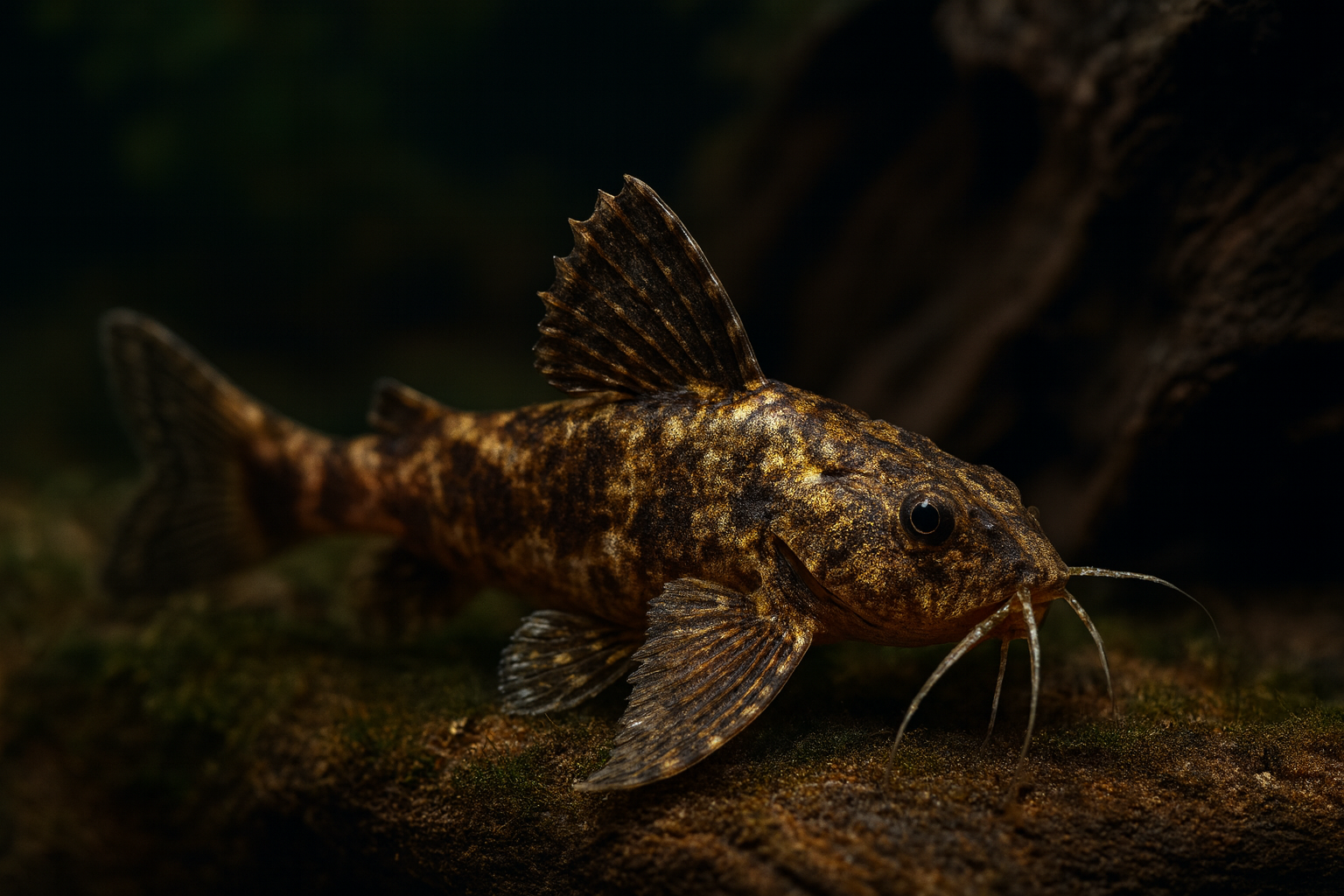
AI-generated for educational reference. Seeking real photo contributions—contact us to help!
Adult Size:
1.5 inches (4 cm)
Recommended Group Size:
6+
Experience Level:
Beginner to Intermediate
Recommended Aquarium Size and Water Parameters
The Dwarf Anchor Catfish (Hara jerdoni) is a cryptic, bottom-dwelling species that thrives in small, low-flow aquariums with stable, soft to moderately hard water. Though diminutive in size (typically under 2 inches), they are social and sedentary, preferring to rest in groups among leaf litter, driftwood, and mossy crevices.
Minimum Tank Size: A 5–10 gallon (20–38 liter) tank is suitable for a small group of 3–6 individuals. These fish are inactive and non-territorial, making them ideal for nano setups — but they still benefit from horizontal space and hiding zones.
Temperature: Native to cooler, shaded streams, they prefer 64–75°F (18–24°C). Avoid tropical highs; elevated temperatures can cause stress and reduce lifespan.
pH Range: Tolerant of slightly acidic to neutral conditions: 5.6–7.6. Stability is more important than precision, but avoid extremes.
Water Hardness: Soft to moderately hard water is ideal: 8–15 dGH. They do not require mineral-rich conditions and may struggle in very hard water.
Flow & Oxygenation: Prefer gentle flow with high oxygen levels. Sponge filters or air-driven setups are ideal. Avoid strong currents that may displace them or inhibit feeding.
Substrate & Decor: Fine sand, smooth gravel, and leaf litter mimic their natural habitat. Provide ample cover with driftwood, stones, and low-light plants like Anubias or Java moss.
Water Quality: Sensitive to ammonia and nitrite. Require mature, cycled tanks with consistent maintenance. Weekly water changes and gentle filtration are essential.
| Parameter | Recommended Range |
|---|---|
| Minimum Tank Size | 5–10 gallons (20–38 liters) for group |
| Temperature | 64–75°F (18–24°C) |
| pH | 5.6–7.6 |
| Hardness | 8–15 dGH |
Compatible Tank Mates
The Asian Stone Catfish, also known as the Dwarf Anchor Catfish, Sylhet Hara, or Moth Catfish, is a peaceful, cryptic bottom-dweller that thrives in quiet, low-flow nano aquariums. Its sedentary nature and slow feeding style make it ideal for non-aggressive microfish that won’t compete for food or territory.
Ideal Companions:
Scarlet Badis (Dario dario): similarly slow and reclusive micropredators
Chili Rasboras & other Boraras species: midwater swimmers that avoid bottom zones
Pygmy Corydoras: gentle, shoaling bottom-dwellers that won’t disturb the catfish
Celestial Pearl Danios & Ember Tetras: peaceful nano fish with complementary behavior
Kuhli Loaches (in larger setups): nocturnal, non-aggressive, and bottom-oriented
Tank Mate Traits to Avoid:
Aggressive or territorial bottom dwellers (e.g., larger loaches, cichlids, or dominant catfish)
Fast, competitive feeders (e.g., danios, guppies, or barbs)
Fin-nippers or hyperactive species that may stress or outcompete the Asian Stone Catfish during feeding
Behavioral Notes:
This species is nocturnal and highly reclusive, often hiding under driftwood or leaf litter during the day.
Best kept in species-only setups or carefully curated nano communities with gentle tank mates.
May consume very small shrimp fry opportunistically, but generally safe with adult Neocaridina or Caridina in well-planted tanks.
| Species | Compatibility Notes |
|---|---|
| Scarlet Badis (Dario dario) | Peaceful micropredator; similar feeding style and habitat preference |
| Chili Rasboras | Midwater swimmers; non-aggressive and visually complementary |
| Pygmy Corydoras | Gentle bottom-dwellers; forage without disturbing Sylhet Hara |
| Celestial Pearl Danios | Peaceful nano fish; avoid hyperactive strains |
| Ember Tetras | Small, calm schooling fish; ideal for planted nano setups |
| Kuhli Loaches | Compatible in larger tanks; nocturnal and non-aggressive |
History / Origin
The species Hara jerdoni, commonly known as the Asian Stone Catfish, or Sylhet Hara, was first described in 1870 by British ichthyologist Francis Day. It belongs to the family Erethistidae, a group of small South Asian river catfishes adapted to life in shaded, detritus-rich environments.
These fish are native to the Ganges and Brahmaputra river basins, particularly in West Bengal, Assam, and Bangladesh, where they inhabit leaf-littered forest streams, shallow creeks, and sluggish tributaries. Their natural habitat is defined by:
Low to moderate current
Dim lighting from dense canopy cover
Soft, sandy or silty substrate
Abundant organic debris, including rotting leaves, twigs, and submerged wood
In these environments, the Asian Stone Catfish uses its mottled brown and gray coloration to blend seamlessly with its surroundings. Its flattened body and extended pectoral fins allow it to anchor itself against surfaces, earning it the nickname Dwarf Anchor Catfish. This camouflage is not just for predator avoidance—it also supports its nocturnal, ambush-foraging behavior, where it waits motionless for microfauna to pass by.
Despite its unique adaptations and peaceful nature, Hara jerdoni remained largely overlooked in the aquarium trade until recent years. Its small size (typically 1.2–1.6 inches), low activity level, and cryptic habits made it less visible in retail tanks, and its care requirements—cooler temperatures, soft water, and low flow—differ from the tropical norm.
Today, thanks to nano tank enthusiasts and biotope aquarists, the Asian Stone Catfish is gaining recognition as a low-maintenance, behaviorally fascinating species ideal for planted, leaf-litter aquascapes. Its rise in popularity reflects a broader shift toward naturalistic, species-specific setups and appreciation for subtle, slow-moving fish that thrive in quiet, stable environments.
Temperament and Personality
The Asian Stone Catfish, also known as the Dwarf Anchor Catfish, Sylhet Hara, or Moth Catfish, is a master of stillness and subtlety. These fish are extremely peaceful, painfully shy, and highly sedentary, making them ideal for aquarists who appreciate quiet, cryptic behavior over flashy activity.
Social Structure:
Though solitary in posture, they are social by nature and thrive in small groups of 3–6 individuals.
Keeping them in groups encourages natural behaviors like synchronized resting, shared hiding zones, and occasional nocturnal foraging.
Activity Level:
These fish are nocturnal ambush omnivores, meaning they remain hidden during daylight hours and emerge slowly at dusk to forage.
Their movement is deliberate and minimal, often limited to short glides between shaded crevices or leaf piles.
Feeding Behavior:
They are non-competitive feeders, preferring to nibble on microfauna, detritus, and soft sinking foods.
In mixed tanks, they may be outpaced by faster species, so feeding after lights-out or using spot-feeding techniques is recommended.
Stress Sensitivity:
Loud tankmates, bright lighting, and strong currents can cause chronic stress, leading to reduced feeding and hiding.
They flourish in dimly lit, low-flow environments with ample cover—think driftwood arches, leaf litter, and mossy stones.
Interaction with Humans:
Don’t expect interaction or visible personality in the traditional sense. These fish are observers, not performers.
Their charm lies in their stillness, camouflage, and quiet resilience—a living embodiment of the forest floor.
Other Pertinent Info
Care Highlights
The Asian Stone Catfish, also known as the Dwarf Anchor Catfish or Sylhet Hara, is a specialist in stillness and subtlety—and its care should reflect that. These fish are best kept in naturalistic, low-energy aquascapes that mimic their native leaf-littered streams in India and Bangladesh.
Substrate & Decor: Use fine sand or smooth gravel to protect their delicate undersides. Add copious hiding places using driftwood, rocks, and dried leaves (e.g., Indian almond or beech) to simulate forest stream beds.
Lighting: Keep lighting dim or dappled. Floating plants like Salvinia or Frogbit help diffuse light and reduce stress.
Feeding: These are nocturnal omnivores. Offer live or frozen microfoods such as daphnia, bloodworms, brine shrimp, and cyclops after lights-out. They may ignore dry foods unless trained.
Water Quality: Require cool (64–75°F / 18–24°C), well-oxygenated water with minimal current. Sponge filters or air-driven setups are ideal. Avoid strong flow.
Tankmates: Avoid boisterous or fast-feeding species. Hara jerdoni are easily outcompeted and stressed by hyperactive or aggressive fish.
Breeding Notes
Breeding Hara jerdoni in captivity is rare but achievable with careful setup:
Spawning Behavior: Males may guard adhesive eggs, which are typically scattered into spawning mops, moss, or leaf litter.
Conditions: A dedicated breeding tank with dim lighting, cool, pristine water, and gentle filtration is essential.
Fry Care: Fry are extremely delicate. They require infusoria or microworms as first foods, and stable, oxygen-rich water to survive. Even minor fluctuations in parameters can be fatal.
⚠️ Common Health Issues
Despite their hardiness in stable setups, Asian Stone Catfish are highly sensitive to environmental stress:
Heat Sensitivity: Temperatures above 75°F (24°C) can cause lethargy, stress, and shortened lifespan.
Oxygen Deprivation: These fish originate from highly oxygenated streams. Poor aeration can lead to skin shedding, a stress response that may resemble disease.
Pollution & Nitrates: Elevated nitrate levels or organic waste buildup can trigger skin issues and immune suppression. Weekly water changes and gentle filtration are essential.
Stress Triggers: Bright lighting, lack of cover, or aggressive tankmates can lead to chronic stress, resulting in reduced feeding, hiding, and eventual decline.
Disease Susceptibility: Like most catfish, they are vulnerable to Ich, fin rot, and columnaris if water quality deteriorates