Betta
(siamese Fighting Fish)
Common Name
Betta (Siamese Fighting Fish)
Scientific Name
Betta splendens
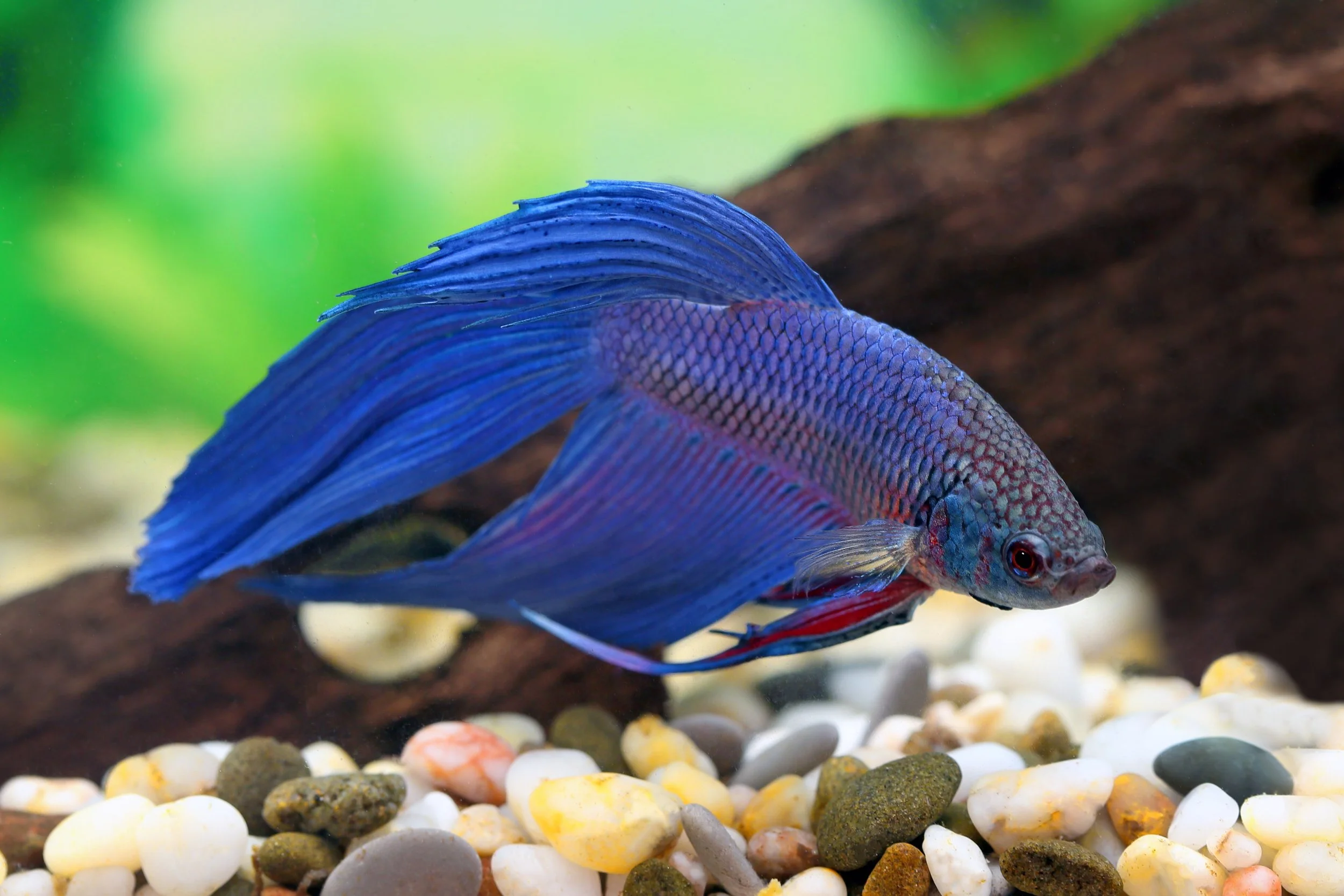
Betta splendens
Adult Size:
2.5–3 inches (6–7.5 cm)
Recommended Group Size:
Solo (males); sorority groups (females)
Experience Level:
Beginner
Recommended Aquarium Size
Contrary to popular belief, bettas require much more space than the typical small bowl or jar. The consensus among experts is a minimum of 5 gallons per fish, with larger aquariums providing greater water stability, enrichment, and health for the fish
| Tank Type | Minimum Size | Recommended Size | Best Size |
|---|---|---|---|
| Single Betta | 5 gallons | 10 gallons | Larger is better |
| Female Sorority | 20 gallons | 40+ gallons | Largest possible size |
Compatible Tank Mates
Most bettas are best kept alone unless you have significant space and experience with their variable, often territorial personalities. Female bettas can be kept in sororities (5+ in a large, heavily planted tank) with careful observation for hierarchy and aggression
| Compatible Species | |
| Type | Suitability & Notes |
|---|---|
| Mystery or Nerite Snails | Excellent choice; peaceful, useful algae-eaters |
| Corydoras Catfish | Good, in 10+ gallon tanks, avoid sharp-edged decor |
| Small Rasboras | Chili rasbora, harlequins – in larger setups |
| Small Tetras | Neon, ember tetras – only if betta is non-aggressive, 10+ gallons |
| Otocinclus, Kuhli Loach | Only in well-sized, mature tanks |
| Amano/Ghost Shrimp | Variable success; can be seen as prey; ample hiding required |
| Incompatible Species | |
| Type | Suitability & Notes |
| Other Bettas (males) | Never; males will fight to the death |
| Flashy fish (guppies, fancy tetras, barbs) | Avoid; bright colors and long fins trigger aggression |
Water Parameters
Bettas demand stable, warm water conditions and do poorly in fluctuating parameters or unheated aquaria. Weekly partial water changes (25–30%) are essential; gentle filtration and frequent monitoring of ammonia are advised
| Parameter | Recommended Range | Notes |
|---|---|---|
| Temperature | 76–80°F (24.5–27°C) | Requires a heater |
| pH | 6.5–7.5 | Must be stable, not fluctuating |
| Hardness | 5–20 dGH | Tolerant, prefers softer water |
| Ammonia/Nitrite | 0 ppm | Crucial, bettas are sensitive |
| Nitrate | <20 ppm | Keep low, partial water changes |
History and Origin
Native to Southeast Asia, wild bettas occur in shallow waters such as rice paddies, slow-moving streams, and floodplains in Thailand, Cambodia, Vietnam, and Laos. The wild type sports short fins and subdued colors, adapted to camouflage among dense vegetation. Centuries of selective breeding have yielded the long-finned, brightly colored domestic forms common today. In their native region, bettas have been bred for centuries for fighting tournaments, influencing the aggressiveness seen in the species. Temperament and Personality
The betta is famous—and notorious—for its aggressive, territorial nature, especially among males, which will fight to the death if housed together. Individual bettas, however, vary widely in temperament: some are so docile they ignore peaceful tank mates, while others will relentlessly attack any perceived rival, including their own reflection and even non-fish tank occupants. Females are more adaptable, though squabbles can erupt in sororities.
Beyond fighting instinct, bettas have surprising intelligence and curiosity, exploring their tank territories, building bubble nests, and recognizing routine and their human caregivers. They are interactive, often “greeting” their owner at feeding time, and may perform learned behaviors if trained using food rewards
Other Pertinent Information
Tank Must-Haves: Lid or mesh cover to prevent jumping; gentle filtration (sponge filter ideal); hiding spots using plants, driftwood, and betta logs; low or moderate flow
Substrate: Sand or smooth, rounded gravel to avoid tearing fins
Plants: Java fern, Anubias, floating plants (frogbit) preferred; silk plants over coarse plastic
Lighting: Low to moderate; avoid harsh, direct light to prevent stress
Feeding: Quality betta pellets/flakes, supplemented with frozen/live foods (bloodworms, brine shrimp); avoid overfeeding
Maintenance: 20% water changes weekly for tanks 5–10 gallons
Behavioral cues: Clamped fins, hiding, excessive flaring, or inactivity indicate possible stress or illness
Breeding: Involves bubble nest building by males and complex courtship rituals, best done only by experienced aquarists
Lifespan: 2–5 years when properly housed