Bronze Corydoras
Common Name
Bronze Corydoras (Emerald Green Cory)
Scientific Name
Corydoras aeneus
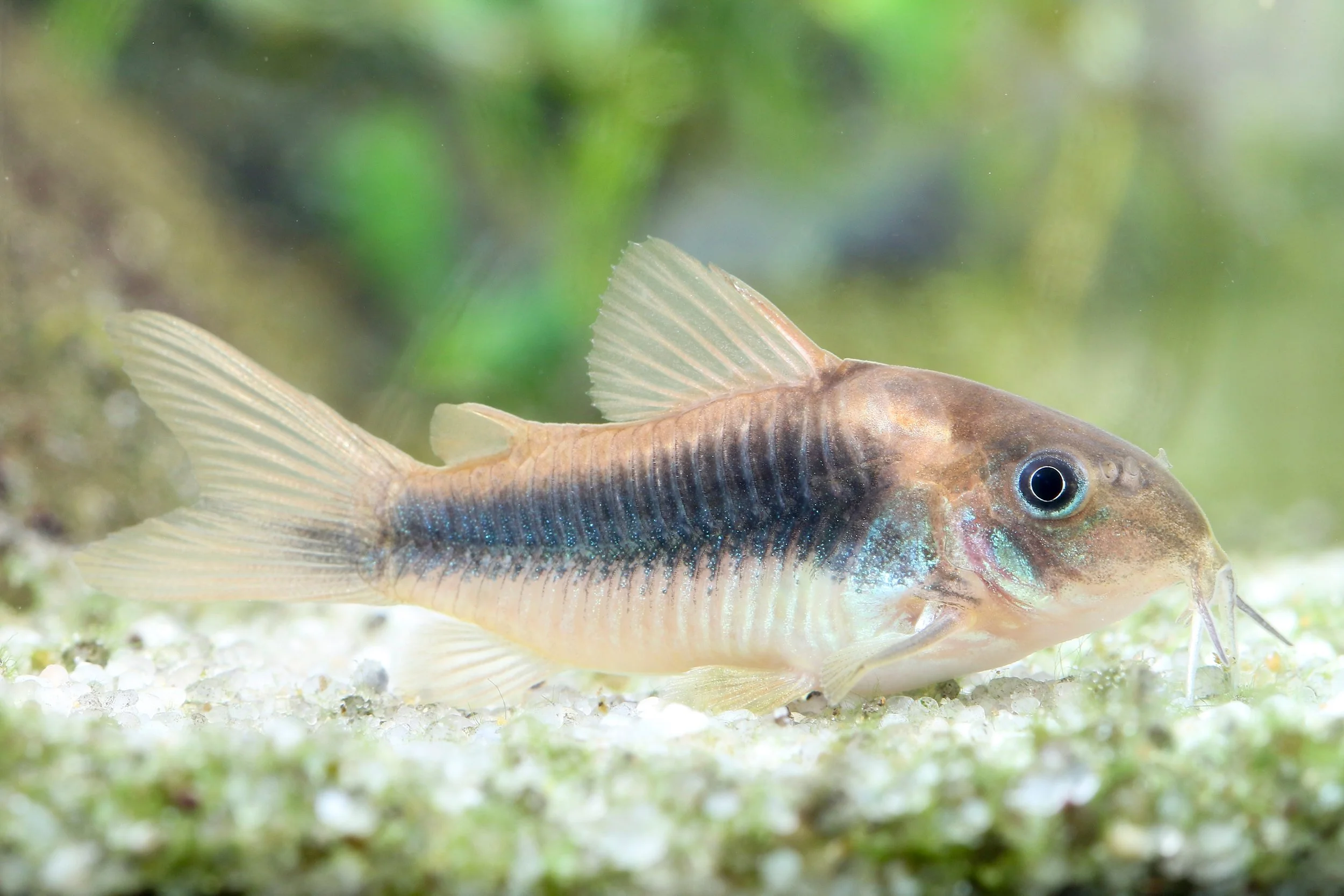
Corydoras aeneus
Adult Size:
2.5 inches (6 cm)
Recommended Group Size:
6+
Experience Level:
Beginner
Recommended Aquarium Size
A group of at least six is critical for health, natural behavior, and stress reduction. In smaller numbers, corydoras become skittish and may hide constantly. More space is preferable for thriving, especially in community tanks
| Group Size | Minimum Tank Size |
|---|---|
| 6+ (proper shoal) | 20 gallons |
| Optimal (shoal in community) | 30 gallons+ |
Compatible Tank Mates
Corydoras are bottom dwellers and keep mostly to themselves, making them excellent community tank residents. Keep with non-aggressive fish of similar size, and avoid large or aggressive tank mates
| Compatible Species | |
| Species | Notes |
|---|---|
| Guppies, platies, mollies, swordtails | Peaceful, active, and similarly sized livebearers |
| Small tetras, rasboras, danios | Schooling top- and midwater species |
| Other corydoras species | Many species will school together |
| Snails, shrimp (adults) | Will generally ignore invertebrates |
| Incompatible Species | |
| Species | Notes |
| Large/boisterous cichlids, barbs | Stress or predation risk |
Water Parameters
Clean, oxygen-rich water is necessary. Corydoras are robust and tolerant but will show stress if ammonia, nitrite, or nitrate levels climb. Maintain soft, slightly acidic-neutral water, with a modest current—avoid strong filter outflows as these can stress or exhaust corys
| Parameter | Recommended Range |
|---|---|
| Temperature | 72–80°F (22–27°C) |
| pH | 6.4–7.6 |
| Hardness | 2–15 dGH |
| Ammonia/Nitrites | 0 ppm |
| Nitrate | <40 ppm (ideally <20 ppm) |
History and Origin
The bronze corydoras is indigenous to slow-moving rivers and floodplains of South America, ranging from Colombia and Trinidad south to Argentina and Brazil. In nature, they forage in large shoals, sweeping soft substrates for small invertebrates, detritus, and plant matter. Their bony plates offer some protection from predators. Their ability to gulp air allows survival in waters with low dissolved oxygen, further adding to their adaptability in captivity
Temperament and Personality
Peaceful, calm, and almost comical in their shoaling antics, bronze corydoras are ideal community fish. They are extremely social and must be kept in groups; solitary corys will languish and become withdrawn. They are most active at dawn and dusk, occasionally dashing to the surface for air. Their shy but curious nature benefits from a tank with plenty of cover, hiding spots, and subdued lighting
Other Pertinent Information
Diet: Omnivores; sinking pellets, wafers, and routine supplementation with frozen or live foods (bloodworms, brine shrimp, daphnia), plus occasional blanched vegetables
Substrate: Fine sand or smooth, rounded gravel; avoid sharp/gritty substrate to protect delicate barbels
Tank Setup: Dense planting or driftwood for cover; floating plants to dim bright lighting
Reproduction: Will spawn readily in home tanks; eggs are attached to glass, leaves, or decor; fry require frequent small meals and gentle filtration
Health: Vulnerable to poor substrate choices and high nitrate levels; regular water changes and substrate vacuuming essential
Lifespan: 5–8 years in aquarium conditions, sometimes more