Bristlenose Pleco
Common Name
Bristlenose Pleco
Scientific Name
Ancistrus spp. (commonly Ancistrus cirrhosus and hybrids)
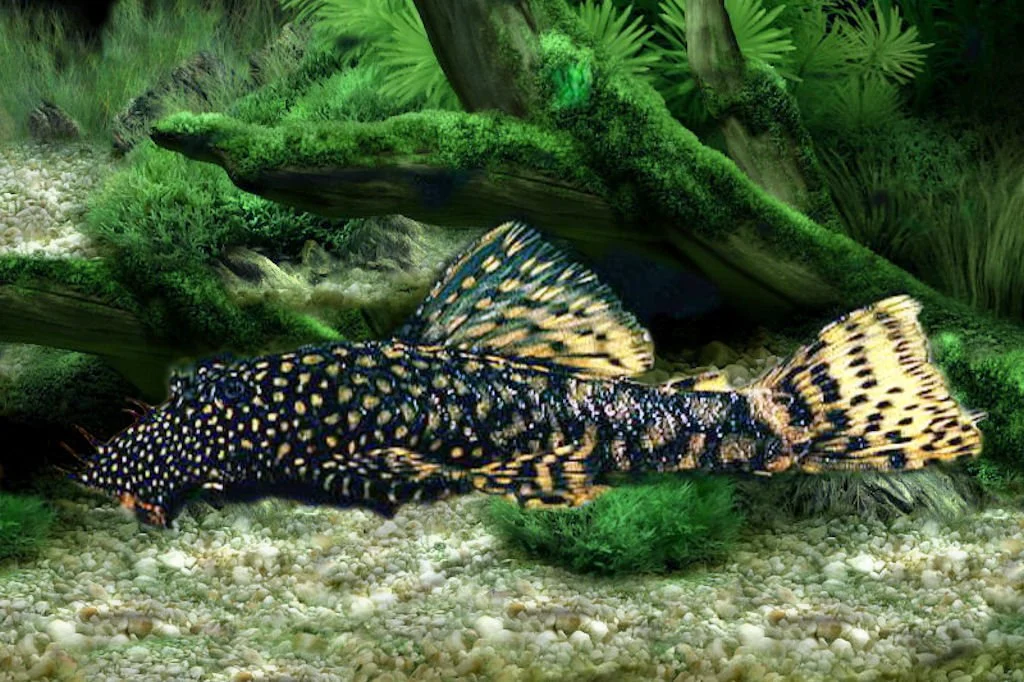
Bristlenose Pleco (Ancistrus spp.), a popular freshwater algae eater known for its flattened body, armored plating, and distinctive facial bristles—especially prominent in males. The fish displays a dark base color speckled with yellow or cream spots, blending naturally into its planted aquarium environment. Moss-covered driftwood and fine gravel mimic its native South American habitat, where it grazes on biofilm and algae. Fun Fact: Unlike many plecos, Ancistrus species stay relatively small—usually under 5 inches—making them ideal for mid-sized tanks. And here’s the quirky part: those bristles aren’t just for show! Males use them to signal territory and attract mates, like underwater mustaches with a purpose.
By The Last 99 - Own work, CC BY-SA 3.0 de, https://commons.wikimedia.org/w/index.php?curid=12110617
Adult Size:
4–6 inches (10–15 cm)
Recommended Tank Size:
29+ gallons
Best for:
Intermediate beginners to experts
Recommended Aquarium Parameters
Bristlenose Plecos are hardy, adaptable bottom-dwellers native to Amazonian tributaries and fast-flowing South American streams. While tolerant of a wide range of water conditions, they thrive in well-oxygenated, stable environments with ample grazing surfaces and shaded resting zones. Their flattened bodies and suckermouths are built for clinging to submerged wood and rocks, making horizontal tank space more important than height.
They prefer mature aquariums with established biofilm and algae, and benefit from driftwood, broad-leaved plants, and caves for daytime shelter. Though not aggressive, they can become territorial with other bottom-dwellers if space is limited.
| Parameter | Range | Notes |
|---|---|---|
| Tank Size | 29+ gallons | Minimum for adult; prioritize horizontal space (24–36" length) |
| Temperature | 73–80°F (23–27°C) | Stable tropical range; avoid sudden shifts |
| pH | 6.5–7.8 | Acidic to neutral; tolerates slight variation |
| Hardness (dGH) | 2–20 | Wide tolerance due to hardiness; soft preferred |
| Ammonia/Nitrite | 0 ppm | Essential; even trace amounts can cause stress or illness |
| Nitrate | < 30 ppm | Lower is better; maintain with regular water changes |
| Flow | Moderate, well-aerated | Mimics riverine origin; supports oxygenation and grazing |
Compatible Tank Mates
Ideal: Peaceful tetras, Corydoras catfish, rasboras, livebearers, loaches, rainbows, danios
Caution: Avoid pairing multiple mature males in small tanks; territorial disputes may occur. Best with one male per tank or groups in large, complexly decorated aquaria.
Avoid: Large or particularly aggressive cichlids and predatory species.
Invertebrates: Compatible with shrimp and most snails; will not eat healthy inverts.
Bristlenose Plecos generally ignore other fish, but can tussle with conspecifics (especially mature males) over caves or breeding sites. Always provide multiple hiding spots and driftwood if keeping more than one Ancistrus.
| Species or Group | Compatibility Notes |
|---|---|
| Peaceful Tetras | Ideal companions; occupy midwater zones and pose no threat |
| Corydoras Catfish | Compatible bottom-dwellers; non-territorial and cooperative |
| Rasboras, Danios, Rainbows | Fast-moving but peaceful; avoid fin-nippers or overly boisterous types |
| Livebearers (Guppies, Mollies, Platies) | Generally peaceful; ensure water parameters align |
| Loaches (e.g., Kuhli, Hillstream) | Compatible if tank is spacious and well-decorated |
| Other Ancistrus | Use caution with multiple mature males; provide caves and visual barriers |
| Large or Aggressive Cichlids | Not recommended; may harass or injure Plecos |
| Predatory Species | Avoid; Bristlenose may be targeted due to size or slow movement |
| Shrimp and Snails | Compatible; Ancistrus do not prey on healthy invertebrates |
History and Origin
Ancistrus are native to tropical freshwater habitats across South America, especially the Amazon basin, where they inhabit sun-dappled, slow-moving rivers and forest streams. These environments are rich in submerged driftwood, tangled roots, and decomposing leaf litter, which provide both shelter and a constant supply of biofilm and soft algae—their primary food sources.
Unlike many larger Loricariids, Ancistrus species are smaller, more adaptable, and better suited to shallow, oxygen-rich zones. Their flattened bodies and suckermouths allow them to cling to surfaces in flowing water, while their bristles (especially in males) help them navigate territorial interactions and attract mates.
In the aquarium trade, Ancistrus cirrhosus and its hybrids dominate the Bristlenose category. These fish are the result of extensive captive breeding programs that began in the mid-to-late 20th century. Over time, breeders have developed a wide variety of color morphs—including albino, longfin, and calico variants—making Ancistrus one of the most visually diverse and widely available plecos in the hobby.
Wild-caught Ancistrus are now uncommon, partly due to the success of captive breeding and partly due to conservation efforts and export restrictions in some regions. Most aquarium specimens are domesticated strains, which are hardier and more tolerant of varied water conditions than their wild ancestors.
Despite their popularity, Bristlenose Plecos still retain many of their natural behaviors: nocturnal grazing, territorial cave use, and a strong preference for wood-rich environments. Their ecological role in the wild—controlling algae and recycling plant matter—translates beautifully to planted aquariums, where they help maintain balance without disrupting tankmates.
Temperament and Personality
Calm and quirky, Bristlenose Plecos are anything but shy with appropriate shelter. They spend much of their time perched on a favorite piece of driftwood, glass, or tucked underneath a broad leaf or inside a cave. Nocturnal habits mean they are most active at night, but well-acclimated individuals often emerge at dusk or during feeding time. Males especially claim territorial “homes,” such as driftwood or artificial caves, and defend these during breeding.
Other Pertinent Care Information
Lifespan: 5–10 years, occasionally longer.
Diet: Primarily algivores/detritivores; relish sinking algae wafers, blanched vegetables (zucchini, cucumber, spinach, peas), and occasional protein (bloodworms, shrimp pellets) for growth. Supplement with driftwood, which supports digestion.
Tank Setup: Bottom-dwelling, requires driftwood, smooth stones, sand or fine gravel, and caves/tubes for breeding or refuge. Broad-leaved plants welcome (caution: may rasp soft leaves if underfed).
Breeding: Cave spawners; males guard clutches of eggs in a chosen cave. Breeding is achievable in home aquaria with appropriate conditions and varied diet.
Health Concerns: Hardy compared to many suckermouth catfish; however, watch for poor nutrition, inappetence after introduction, or damage from aggressive tank mates.
Care Tip: Regularly supplement diet with vegetables to prevent the Pleco “hunger strike” and reduce plant-rasping. Remove uneaten vegetables after a day. If keeping more than one Ancistrus, a cave for each individual reduces conflict.