Celestial Pearl Danio
Common Name
Celestial Pearl Danio, Galaxy Rasbora
Scientific Name:
Danio margaritatus
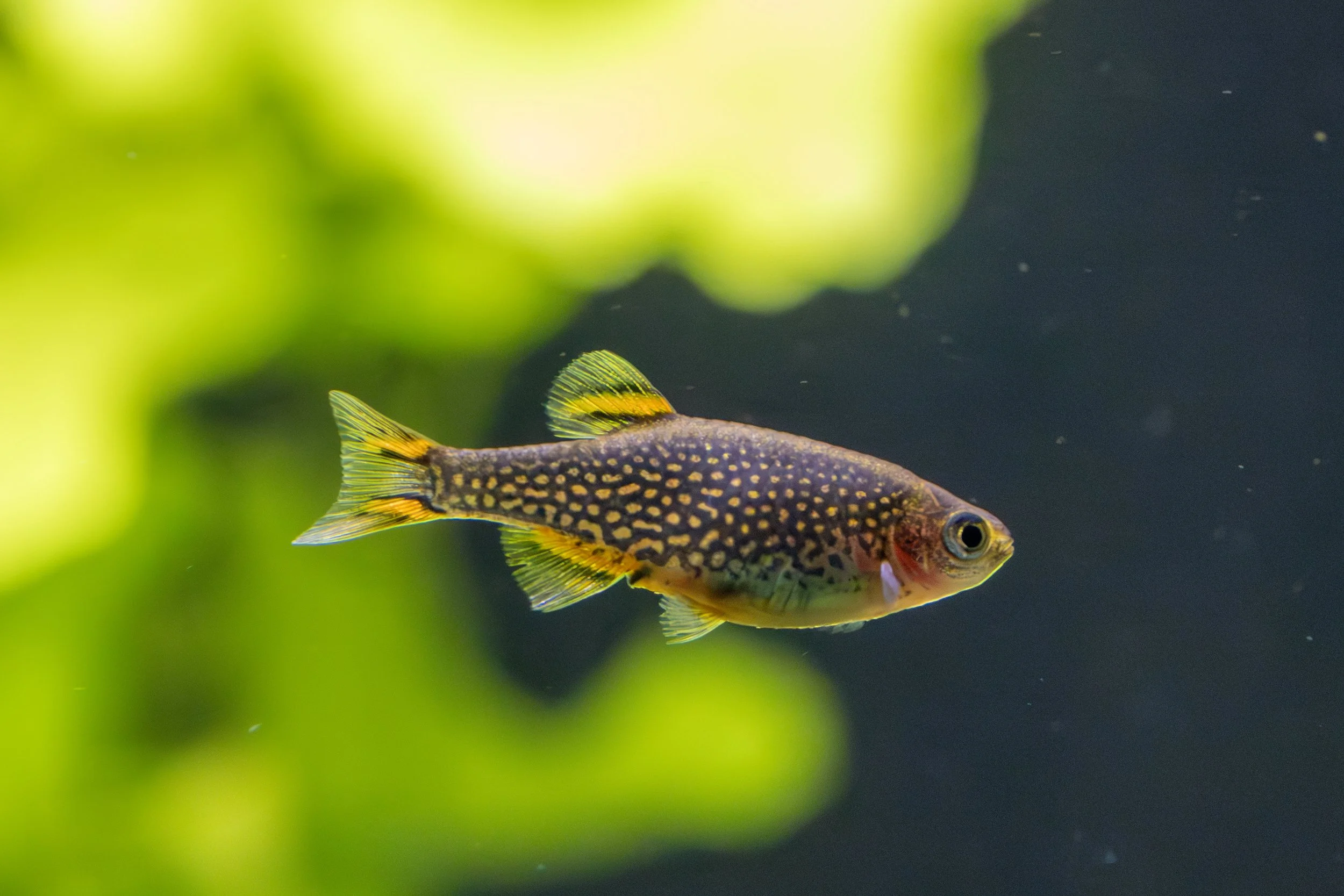
Danio margaritatus, commonly known as the Celestial Pearl Danio. This small cyprinid species is native to highland ponds in Myanmar and is recognized for its iridescent blue body adorned with pearl-like spots and vivid orange-red fin accents. Sexual dimorphism is subtle but present, with males typically displaying more intense coloration and slimmer profiles. Fun Fact: Despite their tiny size—usually under 1 inch—Celestial Pearl Danios engage in elaborate courtship dances, with males flaring their fins and shimmering to impress females in dense vegetation. They're like underwater fireflies with a flair for romance.
Description
Imagine a miniature trout dusted with stardust and rimmed in scarlet: the Celestial Pearl Danio (CPD), also known as "Galaxy Rasbora," is one of the nano tank hobby’s most dazzling gems. These fish are delicately adorned in deep indigo, scattered with creamy-gold “pearl” spots like a night sky, and possess brilliant orange or red fins with black striations. Diminutive (1 inch), but visually captivating in motion, they evocatively “hover” and dart through lush plantings, with males displaying more vivid hues and females boasting a fuller, plumper belly.
Despite their timid size, Celestial Pearl Danios thrive in bustling schools, exploring dense greenery and flashing color when set against dark substrate or vibrant aquatic plants—making them a centerpiece of any aquascape. Their gentle, curious behavior, coupled with easy compatibility and straightforward care requirements, have vaulted the species to stardom among aquascaping enthusiasts and nano tank fans alike.
Adult Size:
0.8–1 inch (2–2.5 cm)
Recommended Group Size:
8–12+
Tank Size:
Minimum 10 gallons (20+ preferred for big groups)
Recommended Aquarium Parameters
Celestial Pearl Danios thrive in cool, stable, and well-planted aquariums that mimic their native highland ponds in Myanmar. These fish prefer gentle flow, soft to moderately hard water, and slightly acidic to neutral pH. A mature tank with dense vegetation—such as Java moss, ferns, and stem plants—offers both cover and spawning surfaces. Open swimming lanes between plant clusters help reduce stress and encourage natural shoaling behavior. Because they’re sensitive to ammonia and temperature swings, new or unstable setups should be avoided.
| Parameter | Range | Notes |
|---|---|---|
| Tank Size | 10+ gallons | Wide, shallow tanks preferred for horizontal swimming |
| Temperature | 72–78°F (22–26°C) | Cool tropical range; avoid rapid fluctuations |
| pH | 6.5–7.5 | Slightly acidic to neutral; stable conditions preferred |
| Hardness | 2–15 dGH | Soft to moderately hard; avoid extremes |
| Ammonia/Nitrite | 0 ppm | Essential; species is highly sensitive to toxins |
| Nitrate | < 30 ppm | Lower levels promote long-term health |
| Flow | Gentle | Replicates natural pond habitat; avoid strong currents |
Compatible Tank Mates
Celestial Pearl Danios are peaceful, non-predatory nano fish that do best with similarly sized, gentle companions. Their shy nature—especially in new or brightly lit tanks—means they benefit from soft lighting, dense plant cover, and calm tank mates. Avoid housing them with large, fast, or aggressive species, as CPDs are easily outcompeted or stressed. Males may spar if overcrowded, so aim for a female-heavy ratio and provide multiple hiding spots. Dither fish like chili rasboras can help coax timid individuals into more active behavior.
Ideal: Other micro/nano fish (chili rasboras, small tetras), pygmy Corydoras, Otocinclus, small peaceful shrimp (Amano, Neocaridina), snails
Caution: Avoid large, fast, or boisterous species; CPDs are easily outcompeted or bullied. Males may spar if crowded—maintain a higher female:male ratio when possible.
| Species or Group | Compatibility Notes |
|---|---|
| Chili Rasboras, Micro Rasboras | Excellent dither fish; peaceful and similarly sized |
| Small Tetras (e.g., Ember, Neon) | Compatible if non-nippy; avoid larger or fast types |
| Pygmy Corydoras | Gentle bottom-dwellers; ideal for nano setups |
| Otocinclus | Peaceful algae grazers; share space well with CPDs |
| Amano & Neocaridina Shrimp | Safe companions; CPDs do not prey on healthy shrimp |
| Snails (e.g., Nerite, Mystery) | Compatible; help with algae and biofilm control |
| Large or Boisterous Fish | Not recommended; may outcompete or stress CPDs |
| Multiple CPD Males | May spar if crowded; maintain higher female ratio and provide cover |
History and Origin
The Celestial Pearl Danio burst onto the aquarium scene in late 2006, when collectors working in the eastern highlands of Myanmar found a previously unknown species in a series of shallow, plant-dense ponds over 1,000 meters above sea level. These isolated bodies of water, part of the Salween River basin, were rich in submerged grasses and soft substrates—ideal conditions for small, shoaling fish like CPDs.
Initially misclassified as a rasbora due to its size and coloration, the species was quickly renamed Danio margaritatus after taxonomic review confirmed its closer relation to other danios like Danio erythromicron. Its striking pattern of iridescent spots and fiery fins earned it the nickname Galaxy Rasbora, which still appears in trade listings today.
However, the species’ popularity came at a cost. Within months of its discovery, wild populations declined sharply due to intense harvesting for export. Conservationists and hobbyists raised alarms, prompting a shift toward captive breeding programs, which proved highly successful. CPDs breed readily in planted aquariums, and most specimens sold today are tank-bred, not wild-caught.
Despite this success, responsible aquarists are encouraged to prioritize tank-raised stock to avoid renewed pressure on wild populations. The original habitat remains vulnerable, and the species is still listed as Data Deficient by the IUCN due to limited long-term population data.
Today, Danio margaritatus is a staple of nano aquascaping and peaceful community tanks, valued not just for its beauty but for its adaptability and breeding potential. Its story is a rare example of how early intervention and hobbyist awareness helped preserve a species from the brink of overexploitation.
Temperament and Personality
Celestial Pearl Danios are gregarious, curious nano fish that thrive in tight schools of 8–12 or more. They prefer the lower to midwater zones, weaving through roots and gliding above crypts, often pausing to inspect leaves or interact with tank mates. Males may flare or “dance” in harmless displays, especially during courtship or mild territorial sparring. A female-biased ratio helps reduce tension and encourages more balanced group dynamics. In well-planted tanks with soft lighting, CPDs become bold, active, and endlessly watchable.
Other Pertinent Care Information
Lifespan: 3–5 years.
Diet: Omnivorous micro-predators; accept high-quality micro-pellets, crushable flakes, and love live/frozen baby brine shrimp, daphnia, and micro-worms. Many will graze biofilm or algae.
Tank Setup: Heavy planting, fine substrate, driftwood, and shaded “cover” are essential. A dark background intensifies color.
Breeding: Egg scatterers; easily breed in well-conditioned, densely planted tanks. Remove adults or eggs for best fry survival.
Health Concerns: Vulnerable to fin rot/ich if water is not pristine. Monitor for stress-induced diseases.
Care Tip: Never overcrowd or keep singly; Celestial Pearl Danios show their best color and health in well-managed groups. Regular water changes keep their colors vibrant and health robust.