Hillstream Loach
Common Name
Hillstream Loach, Reticulated Hillstream Loach, Butterfly Loach
Scientific Name
Sewellia lineolata
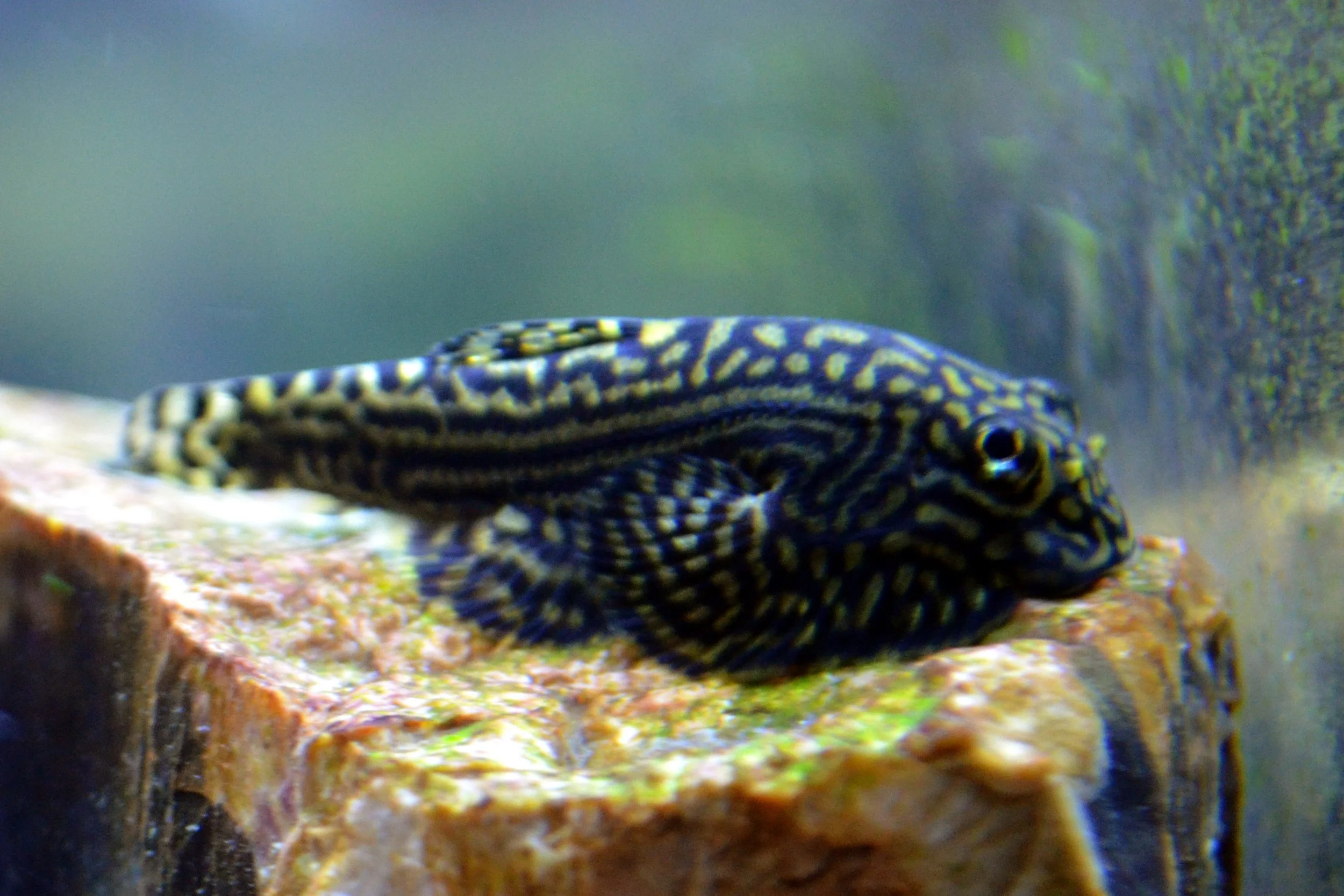
Image Description: A Reticulated Hillstream Loach (Sewellia lineolata) clings to smooth river stones with its specialized ventral fins, showcasing its intricate maze-like pattern and flattened body adapted for high-flow environments.
Fun Fact: This loach’s “suction cup” fins don’t just help it grip rocks—they also allow it to graze upside down on aquarium glass, making it one of the few fish that can defy gravity while feeding.
Photo Credit: By Spiketooth – Own work, licensed under CC BY-SA 3.0.
Adult Size:
2–3 inches (5–7.5 cm)
Recommended Group Size:
3–6+
Experience Level:
Intermediate
Recommended Aquarium Size and Water Parameters
Hillstream Loaches are native to fast-flowing, rocky streams across Southeast Asia, where oxygen levels are high and temperatures remain cool. Despite their small adult size of 2–3 inches, they require a minimum of 40–50 gallons to mimic their natural environment and support a group of 3–4 individuals. This space allows for proper grazing surfaces, territorial separation, and stable water chemistry.
Water flow and oxygenation are critical. These loaches thrive in tanks with strong current, high dissolved oxygen, and clean, well-filtered water. A river manifold setup or powerheads with sponge pre-filters are ideal. They are sensitive to poor water quality and require consistent maintenance.
Temperature should stay between 65–75°F (18–24°C)—cooler than typical tropical setups. While they can tolerate up to 80°F briefly, prolonged exposure increases stress and disease risk. pH should remain stable between 6.5–7.5, with a slight preference toward neutral. Water hardness should be moderate (4–12 dGH), replicating the mineral content of their native streams.
A tight-fitting lid is essential: Hillstream Loaches are known escape artists and can climb glass or enter filter intakes.
| Parameter | Range |
|---|---|
| Minimum Tank Size | 40–50 gallons (150–190 liters), group of 3–4 |
| Temperature | 68–75°F (20–24°C) |
| pH | 6.5–7.5 |
| Hardness | 4–12 dGH, soft to medium |
Compatible Tank Mates
Hillstream Loaches are peaceful, bottom-dwelling fish adapted to fast-flowing, oxygen-rich streams. They do best with cool-water, non-aggressive species that won’t compete for territory or food at the substrate level. Ideal tank mates include White Cloud Mountain Minnows, small danios, peaceful barbs, and Otocinclus catfish—all of which tolerate lower temperatures and share a calm temperament.
Because Hillstream Loaches rely on high oxygen levels and stable water flow, it’s important to avoid slow-moving warm-water fish like gouramis, angelfish, or bettas. These species not only prefer different conditions but may also stress or outcompete loaches. Similarly, boisterous or large fish can disrupt the loach’s natural grazing and resting behavior.
| Species | Compatibility & Notes |
|---|---|
| White Cloud Mountain Minnows | Excellent match; cool-water schooling fish with peaceful behavior |
| Small Danios (e.g., Zebra, Leopard) | Fast swimmers; compatible in high-flow, cooler setups |
| Peaceful Barbs (e.g., Cherry Barbs) | Non-aggressive and temperature-tolerant; avoid larger or nippy barbs |
| Otocinclus Catfish | Gentle algae grazers; share substrate space without conflict |
| Other Hillstream Loaches | Can be kept in small groups; provide multiple grazing zones and hiding spots |
History / Origin
The Reticulated Hillstream Loach (Sewellia lineolata) hails from the fast-moving, oxygen-rich streams of central Vietnam, where water rushes over smooth stones and boulders in shaded forest creeks. These environments are cool, highly aerated, and rich in biofilm—conditions that shaped the loach’s remarkable adaptations.
Its most iconic feature is its flattened body and ventral “suction cup” fins, which allow it to cling effortlessly to rocks in powerful currents. This morphology isn’t just for survival—it’s a marvel of evolutionary engineering, enabling the loach to graze on algae and microorganisms without being swept away. The intricate reticulated patterning across its body provides camouflage against the rocky substrate, while also making it a standout in aquascaping circles.
Although once a rarity in the aquarium trade, Sewellia lineolata is now widely captive bred, reducing pressure on wild populations and making it more accessible to aquarists. Its popularity has surged thanks to its peaceful nature, unique appearance, and compatibility with river-style setups. Today, it’s celebrated not only for its beauty but also for its role in showcasing the biodiversity of Southeast Asia’s freshwater ecosystems.
Temperament and Personality
The Reticulated Hillstream Loach is a peaceful, bottom-dwelling species with a surprisingly social streak—especially when kept in well-structured groups. While generally non-aggressive, they can be territorial with conspecifics, particularly when competing for prime grazing spots or shelter. These interactions are typically brief and non-damaging, especially when the tank includes ample hiding places and visual barriers.
In a properly aquascaped setup, their behavior is both functional and mesmerizing. Hillstream Loaches spend much of their time grazing on biofilm and algae, using their suction-cup fins to cling to rocks, driftwood, and even aquarium glass. Their vibrant, patterned bodies ripple with motion as they move across surfaces, creating a dynamic visual experience that’s both calming and captivating.
They’re most active during daylight hours and tend to become more animated in high-flow zones, mimicking their natural stream habitats. When kept in groups of three or more, they often display mild social behaviors, including synchronized grazing and occasional playful chasing. These loaches are not shy—but they do appreciate shaded areas and stable conditions to feel secure and show their best colors.
In short, Sewellia lineolata offers a rare blend of peaceful temperament, unique locomotion, and visual charm—making them a standout in any cool-water, river-style aquascape.
Other Pertinent Information
Diet: Primarily herbivorous; grazes on biofilm, algae, and microorganisms. Supplement with blanched vegetables, spirulina wafers, and occasional protein like bloodworms or Repashy gel foods. Avoid overfeeding—loaches prefer constant grazing over large meals.
Social Structure: Best kept in groups of 6 or more to reduce territorial stress and encourage natural behavior. Smaller groups may lead to dominance disputes or isolation.
Flow & Oxygenation: Requires strong current and high dissolved oxygen. Use river manifold setups, powerheads, and visibly agitated surface water. Backup air pumps are recommended during power outages.
Tank Setup: Mimic a rocky stream with smooth stones, fine sand, and minimal plants. Avoid sharp décor or rough substrate that could damage their scaleless bodies. A tight-fitting lid is essential—these loaches can climb glass and escape.
Lighting Sensitivity: Moderate lighting preferred. Bright light encourages algae growth but may cause hiding behavior if not balanced with shaded zones.
Activity Zone: Bottom-dweller; clings to rocks, glass, and driftwood. Known for side-to-side crawling and fluttering fin movements. Most active during the day.
Lifespan: Typically 8–10 years with stable water parameters and consistent care.
Behavioral Traits: Peaceful but mildly territorial with similar-shaped fish. Avoid housing with other bottom dwellers that compete for grazing space (e.g., plecos or larger loaches).
Sensitivity: Vulnerable to acclimation shock, low oxygen, nitrite spikes, and starvation in competitive tanks. Avoid copper-based medications and sudden parameter changes.
Escape Risk: High. Known to climb filter intakes and glass walls. Always use a secure lid and check filter compartments if a loach goes missing.