Peacock Gudgeon
Common Name
Peacock Gudgeon, Peacock Goby
Scientific Name
Tateurndina ocellicauda
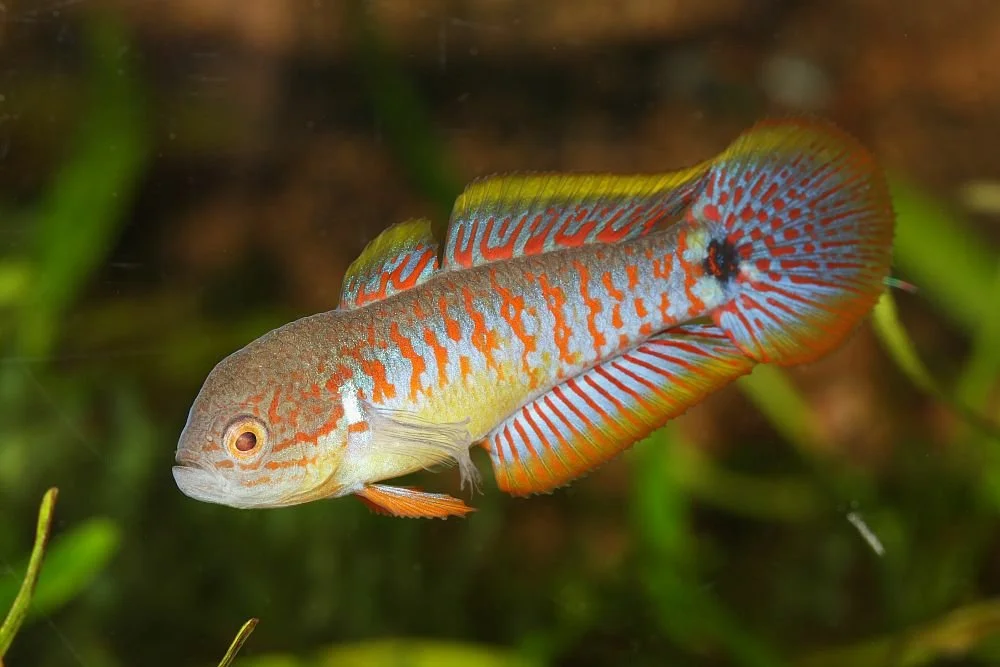
Peacock Gudgeon (Tateurndina ocellicauda) is a small, peaceful freshwater fish native to Papua New Guinea, prized for its vibrant coloration and elegant torpedo-shaped body. Males display striking blue, yellow, and red hues with a signature black eyespot near the tail. They thrive in planted tanks with gentle flow and calm tank mates.
Fun fact: Despite their bold colors, Peacock Gudgeons are cave spawners—males guard the eggs inside small crevices until they hatch, often fanning them with their fins to keep them oxygenated
By Dirk Godlinski, CC BY-SA 3.0, https://commons.wikimedia.org/w/index.php?curid=15875989
Adult Size:
2.5–3 inches (6–7.5 cm)
Recommended Group Size:
1 male with 2–3 females
Experience Level:
Intermediate
Recommended Aquarium Size and Water Parameters
Peacock Gudgeons are small, peaceful fish that thrive in social groups and planted environments. A minimum of 15 gallons (60 liters) is recommended for a group of 6–8 individuals, allowing enough space for natural behavior, territory establishment, and visual separation. While they are not aggressive, males may display mild territorial behavior during breeding, so horizontal swimming space and visual barriers (plants, driftwood, caves) are essential.
A well-aquascaped tank with gentle flow and shaded areas helps reduce stress and encourages natural coloration and courtship behavior. Smaller tanks may lead to crowding, stress, and reduced lifespan, especially if multiple males are present.
| Parameter | Range |
|---|---|
| Minimum Tank Size | 15 gallons (60 liters) for a group (6–8 fish) |
| Temperature | 72–79°F (22–26°C) |
| pH | 6.0–7.8 (best near 7.0) |
| Hardness | 5–12 dGH |
Compatible Tank Mates
Peacock Gudgeons are peaceful, inquisitive fish that do best in calm community tanks with similarly sized companions. Ideal tank mates include small tetras, rasboras, celestial pearl danios, and bottom-dwellers like corydoras. These species share the same gentle temperament and won’t compete aggressively for food or territory.
While Peacock Gudgeons are not aggressive, they may show mild territorial behavior during breeding, especially males guarding cave sites. Providing plenty of hiding spots and visual barriers helps diffuse tension. Shrimp fry may be at risk of predation, though adult shrimp are often left alone if the tank is well-planted and spacious.
Avoid housing them with large, boisterous, or nippy fish such as barbs, cichlids, or fast-swimming danios. These can intimidate or outcompete Peacock Gudgeons, leading to stress and reduced coloration. A peaceful, planted setup with gentle tank mates allows their vibrant colors and curious personality to shine.
| Species | Compatibility & Notes |
|---|---|
| Small Tetras (e.g., Ember, Neon) | Peaceful, similar size; ideal for planted tanks |
| Rasboras (e.g., Harlequin, Chili) | Gentle swimmers; visually complementary and non-aggressive |
| Corydoras Catfish | Bottom dwellers; peaceful and unobtrusive |
| Celestial Pearl Danios | Small, colorful, and peaceful; good visual match |
| Adult Shrimp (e.g., Amano, Neocaridina) | Generally safe if tank is well-planted; fry may be eaten |
| Otocinclus | Small algae eaters; peaceful and ideal for planted setups |
History / Origin
The Peacock Gudgeon (Tateurndina ocellicauda) is a freshwater gem native to the slow-moving rainforest streams of Papua New Guinea, where shaded waters and dense vegetation create a tranquil habitat ideal for this species’ peaceful temperament. Its vibrant coloration—featuring iridescent blues, yellows, and reds—has earned it a reputation as one of the most visually striking nano fish in the aquarium hobby.
What makes the Peacock Gudgeon especially unique is its taxonomic status: it is the sole member of the genus Tateurndina, making it a one-of-a-kind evolutionary lineage. This distinction adds scientific intrigue to its already captivating appearance.
Although originally wild-caught, the species is now widely captive bred, ensuring sustainable availability for aquarists and reducing pressure on native populations. Captive breeding has also helped refine its coloration and temperament, making it even more suitable for peaceful community tanks. Its popularity continues to grow among aquarists seeking a small, colorful, and behaviorally engaging species that thrives in planted environments.
Temperament and Personality
Peacock Gudgeons are known for their peaceful, social nature, making them ideal candidates for calm community aquariums. They thrive in small groups, where their gregarious behavior and vibrant coloration are most pronounced. While generally non-aggressive, males may engage in light sparring or display behavior, especially during breeding periods. These interactions are rarely harmful and add to their visual charm.
Their curious and active disposition leads them to explore every corner of a planted aquascape, often hovering in place with a gentle flutter of their fins. This hovering behavior, combined with their bold colors and expressive movements, gives them a unique presence in the mid-to-lower zones of the tank. They’re not shy, but they do appreciate shaded areas and visual cover, which help them feel secure and encourage natural behavior.
Overall, Peacock Gudgeons are a joy to watch—engaging, peaceful, and full of personality when kept in well-structured, low-stress environments.
Other Pertinent Information
Diet: Omnivorous; thrives on live or frozen meaty foods like brine shrimp, daphnia, and bloodworms. Will accept high-quality micro pellets and flakes once acclimated.
Tank Setup: Prefers heavily planted tanks with soft sand substrate, gentle flow, and subdued lighting. Caves and crevices are essential for breeding and security.
Social Structure: Best kept in groups of 6–8 to encourage natural behavior and reduce stress. Males may spar lightly but rarely injure one another.
Behavioral Traits: Known for hovering midwater and exploring aquascapes with curiosity. Displays vibrant coloration when relaxed and well-fed.
Lighting Sensitivity: Colors intensify under soft, indirect lighting. Bright lighting may cause hiding or washed-out appearance.
Breeding Behavior: Cave spawner; males guard eggs and fan them until hatching. Fry require microscopic food and gradual transition to baby brine shrimp.
Jump Risk: Moderate; secure lids recommended, especially during breeding or sudden disturbances.
Species Uniqueness: Sole member of the genus Tateurndina, making it a one-of-a-kind evolutionary lineage.
Lifespan: Typically 4–6 years with stable water conditions and a varied diet.
Sensitivity: Susceptible to skin flukes, hole-in-the-head, and stress-related illness in poor water. Avoid copper-based medications.
Activity Zone: Mid-to-lower swimmer; interacts with substrate and caves but rarely surfaces.