Molly
Common Name
Molly (Short-finned molly, Black Molly, etc.)
Scientific Name
Poecilia sphenops
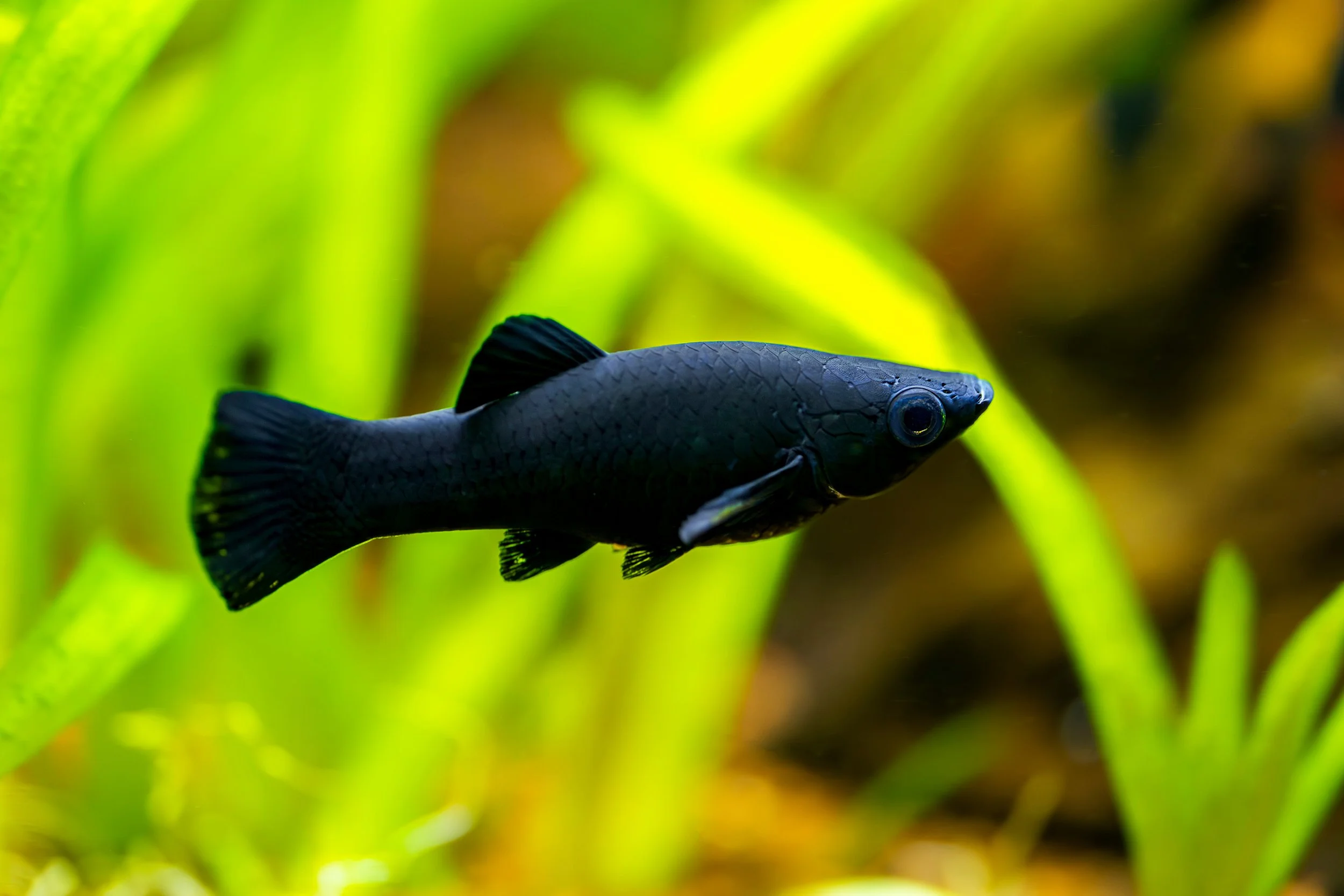
Poecilia sphenops, commonly known as the molly, is a hardy and peaceful livebearer popular in freshwater aquariums. These fish come in a variety of colors, including black, gold, and dalmatian patterns, and thrive in slightly brackish water. Fun fact: mollies can adapt to both freshwater and saltwater environments, making them one of the most versatile aquarium species!
Adult Size:
3–4 inches (7.5–10 cm)
Recommended Group Size:
4–6+
Experience Level:
Beginner
Recommended Aquarium Size
Mollies are active, robust, and relatively large for livebearers. They require more space than guppies; a 20-gallon is the minimum for a small group, but a 30+ gallon tank is recommended for a mix of sexes or an active community setup
| Group Size | Minimum Tank Size | Notes |
|---|---|---|
| Small group (3–4) | 20 gallons | For stable water, adequate swimming space |
| Larger group or community | 30 gallons+ | Needed for multiple males or heavy planting |
Compatible Tank Mates
Avoid: Large or aggressive cichlids, tiger barbs, bettas, and goldfish.
Mollies do best with other peaceful, similarly sized fish that share their preference for slightly alkaline, mineral-rich water
Mollies (Poecilia sphenops) are peaceful, social livebearers that thrive in community aquariums with similarly sized, non-aggressive fish. Ideal tank mates include platies, guppies, swordtails, corydoras catfish, and bristlenose plecos—species that share mollies’ preference for slightly alkaline, mineral-rich water. Mollies do best in groups and appreciate planted tanks with open swimming space. Avoid housing them with large or aggressive cichlids, tiger barbs, bettas, or goldfish, as these can stress, injure, or outcompete mollies. Fin-nippers and cold-water species are especially problematic. While mollies are adaptable, stable water chemistry and compatible companions are key to their health and vibrant behavior. Mixing males and females is fine, but a higher ratio of females helps reduce breeding stress
| Compatible Species | Notes |
|---|---|
| Guppies, platies, swordtails | Similar livebearers; watch for hybrids |
| Corydoras, most tetras, danios | Peaceful mid- or top-water swimmers |
| Otocinclus, bristlenose pleco | Algae control, require ample space |
| Rasboras, rainbowfish | Peaceful, prefer soft water, check parameters |
| Shrimp, snails | Generally safe if well-established, but fry may be at risk |
Water Parameters
Mollies thrive in harder, alkaline water. They can tolerate slight brackishness if aquarium salt is used, though salt is optional for most domestic varieties. Keep up with regular water changes and use a heater to avoid drops in temperature; mollies are sensitive to chilling
| Parameter | Ideal Range |
|---|---|
| Temperature | 74–82°F (23–28°C) |
| pH | 7.0–8.5 |
| Hardness | 10–25 dGH |
| Ammonia/Nitrite | 0 ppm |
| Nitrate | <20 ppm |
History and Origin
Originally from Central and North America (Mexico to Colombia), mollies inhabit rivers, estuaries, and brackish coastal lagoons. In the wild, they are typically duller in color (gray/brown); the dazzling varieties seen today are the results of extensive selective breeding, sometimes hybridized with guppies or sailfin mollies for brilliant patterning. They are renowned for their adaptability and hardiness
Temperament and Personality
Mollies are active, peaceful, and social, thriving in groups of their own kind. Males can show mild dominance, so larger tanks and a higher female-to-male ratio are recommended to prevent stress or fighting. They spend much time browsing all tank surfaces for algae and food, and interact readily with their keepers. Their peaceful yet assertive demeanor makes them suitable for a wide range of community tanks, but avoid crowding or sharp swings in water conditions
Other Pertinent Information
Diet: Omnivorous, but require substantial plant matter—offer spirulina, blanched vegetable slices, and quality algae wafers alongside flakes and pellets; supplement with live/frozen foods.
Tank Setup: Sand or smooth gravel, dense plants, driftwood for hiding, moderate current; sensitive to poor water quality—more frequent partial water changes are best.
Breeding: Livebearers; 20–100 fry every 4–6 weeks; adults may eat fry—use heavy planting/nurseries for survival
Health: Prone to shimmies (nervous movements), fin rot, and ich in poor water or low temperatures.
Lifespan: Typically 3–5 years.
Behavioral quirks: Mollies may jump, so a tight-fitting lid is needed.