Neon Tetra
Common Name
Neon Tetra
Scientific Name
Paracheirodon innesi
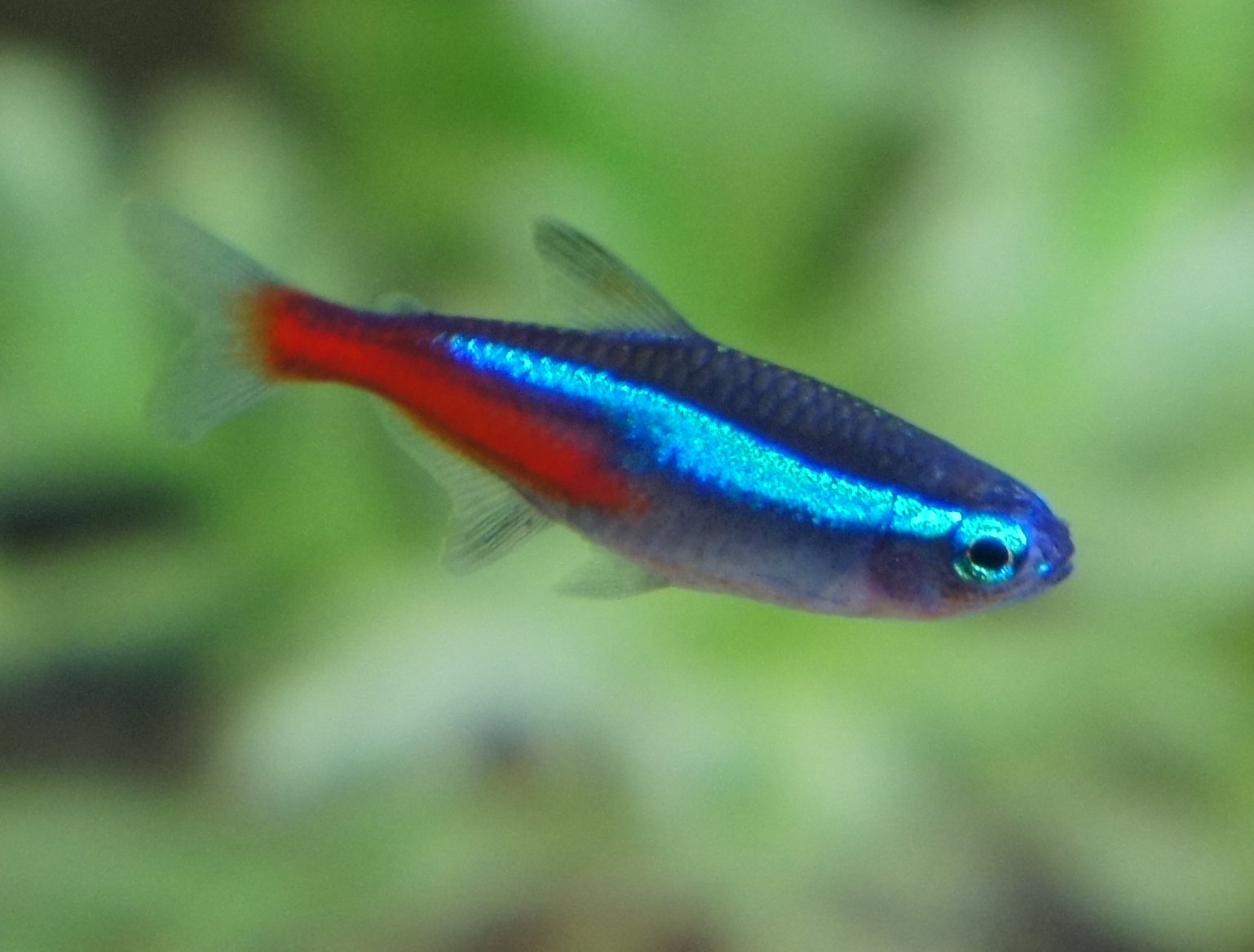
Paracheirodon innesi, better known as the neon tetra, is a small, schooling fish prized for its vibrant blue and red stripes. Native to the Amazon basin, it thrives in soft, slightly acidic water and peaceful community tanks. Fun fact: neon tetras can synchronize their movements in schools, creating a dazzling shimmer effect in planted aquariums!
By Corpse89 - Own work, CC BY-SA 3.0, https://commons.wikimedia.org/w/index.php?curid=24763073
Adult Size:
1.5 inches (4 cm)
Recommended Group Size:
6+
Experience Level:
Beginner
Recommended Aquarium Size
Neon tetras are small, peaceful, but strictly schooling fish. They require a group of at least six (more is always better) to display natural behaviors and minimize stress. Larger groups are best in 20+ gallons, which allow for stunning displays
| School Size | Minimum Tank Size |
|---|---|
| 6–8 | 10 gallons |
| 10–15+ | 20 gallons+ |
Compatible Tank Mates
Neon tetras (Paracheirodon innesi) are small, peaceful schooling fish that require gentle tank mates to thrive. Because of their size—typically under 1.5 inches—they’re vulnerable to larger or predatory species that may see them as food. Mixing neon tetras with angelfish or large cichlids is risky and should only be attempted in well-established tanks where the fish have been raised together from a young age. Even then, caution is essential, as adult angelfish often develop predatory instincts. Ideal companions include other small, non-aggressive fish like rasboras, guppies, corydoras, and peaceful tetras. Avoid fin-nippers, fast-chasing species, or anything large enough to swallow a neon whole. A calm, densely planted tank with stable water parameters helps reduce stress and encourages natural schooling behavior.
| Compatible Species | Notes |
|---|---|
| Guppies, platies, mollies, swordtails | Must be adults; avoid large size differences |
| Small rasboras | Excellent match; maintain school size |
| Corydoras, otocinclus, bristlenose plecos | Peaceful bottom dwellers; avoid large species |
| Dwarf gouramis, honey gouramis | Only very peaceful/gentle individuals |
| Avoid: large, predatory, or nippy fish (angelfish, barbs, cichlids) | May harass or eat neons |
Water Parameters
Neon tetras thrive in soft, acidic, blackwater-type aquaria, mimicking their Amazonian roots. They are sensitive to poor or fluctuating water quality and require gentle filtration and stable parameters for full coloration and longevity
| Parameter | Ideal Range |
|---|---|
| Temperature | 72–78°F (22–26°C) |
| pH | 6.0–7.0 (slightly acidic best) |
| Hardness | 3–8 dGH |
| Ammonia/Nitrite | 0 ppm |
| Nitrate | <20 ppm |
History and Origin
Native to western Amazon basin in Peru, Brazil, and Colombia, neons inhabit forested streams and tributaries, where they find safety in massive schools and use their brilliant colors to communicate, evade predators, or blend into dappled light. Their popularity exploded after introduction to the United States in the 1930s, and they remain a staple of the aquarium hobby due to their striking beauty and peaceful nature
Temperament and Personality
Neon tetras are docile, peaceful, schooling, and completely non-aggressive. They swim in coordinated, tight groups for safety; isolated or kept singly, they rapidly decline in health and display. In community tanks, they are shy, preferring cover and subdued light, but when comfortable, they display spontaneous group swimming and intricate color flashes. Stress is expressed by faded coloration or hiding
Other Pertinent Information
Diet: Omnivores; very small flakes, micro-pellets, fine frozen foods (baby brine shrimp, daphnia, bloodworms)
Tank Setup: Dense planting, driftwood, leaf litter (optional), and dark substrate simulate the natural environment and enhance colors.
Maintenance: Require mature, cycled tanks; are highly susceptible to “Neon Tetra Disease” (irreversible, often fatal) and other infections; quarantine all new additions.
Breeding: Challenging; require very soft, acidic water and dim light. Scatter their eggs among plants; adults will eat eggs/fry if not separated.
Lifespan: 5–8 years in immaculate, stable conditions.